START

Airlines Should Give Their Best Passengers the Cheapest Seats

A modest proposal for the airline industry.

About a dozen years ago, trapped in the middle seat of basic economy, I sat next to a young woman on a flight from San Francisco to Los Angeles. She spent 15 minutes perusing the in-flight entertainment on the touchscreen seatback. Then she suddenly stopped for other, more urgent matters–she had an itch. She plunged her right hand down her pants and ferociously scratched her crotch. The hand emerged. Her crusty talons lingered momentarily and then resumed clawing. Whatever caused the itch never seemed to abate as she scratched on and off until we landed.

Though this behavior was vile enough to place her on my personal top-five list of worst passengers I’ve encountered, what shot her to number one was this: she never decided on what to watch. That right hand, coated with a repulsive mixture of jock itch and groin sweat, continuously pressed on the seatback screen. Scroll. Scratch. Scroll. Scratch.

I think about that Grand Guignol every time I read another plane-passenger horror story, whether they be violent melees, shouting matches, or repulsive displays. But lately, I’ve started to wonder if there’s anything that can actually be done about it. Shame hasn’t worked, nor has the threat of arrest, or banishment–we still constantly read about incidents, often recorded and blasted on social media. But the approaches thus far to in-flight incidents are all reduced to sticks. What we need is a carrot–and I think I’ve come up with one.

Introducing: Polite Class.

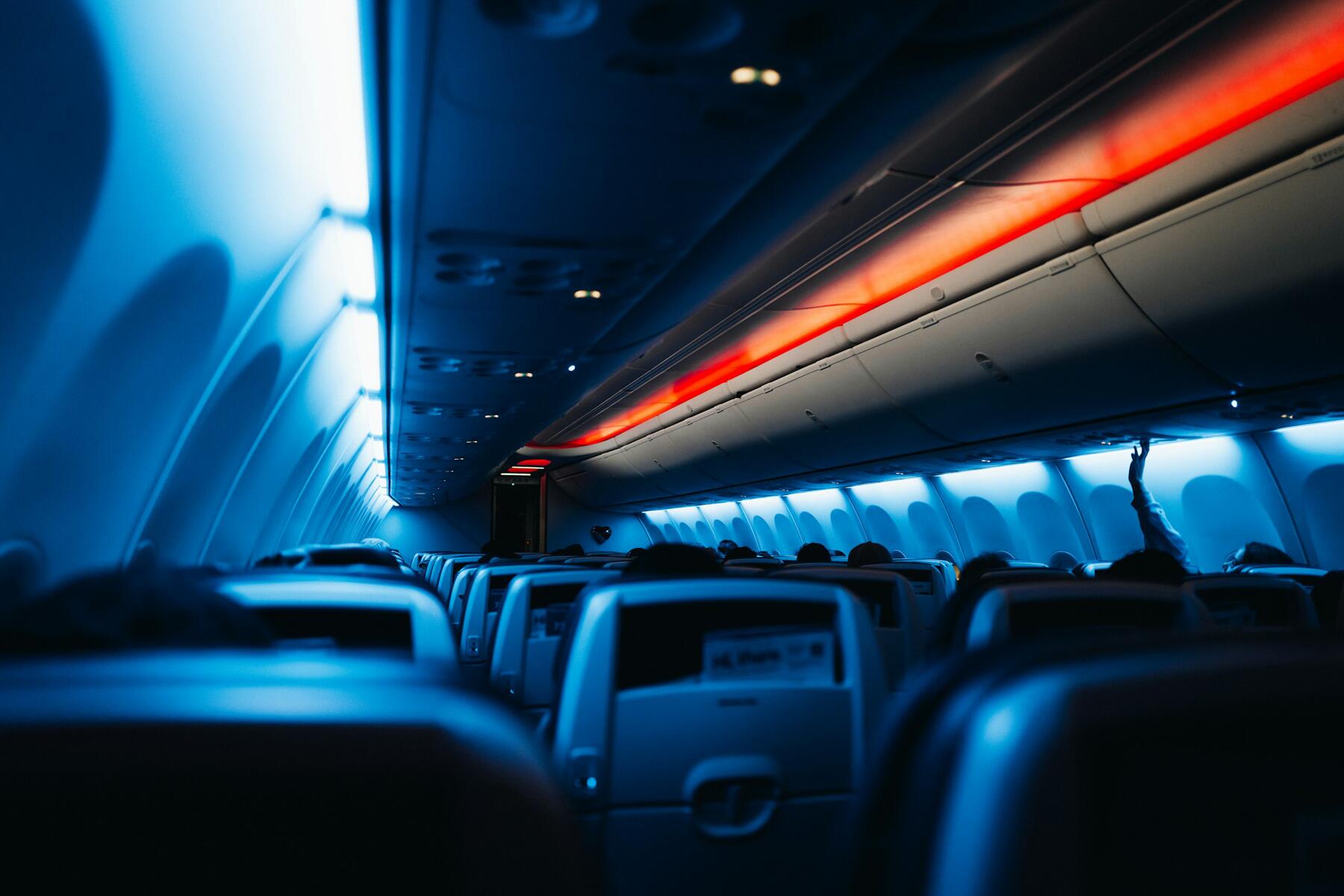
Polite Class is a separate cabin on an airline, located behind business and ahead of premium economy. But here’s the catch: Polite Class seats cost less than basic economy. However, passengers must sign a contract, agreeing to several rules of conduct. Failure to meet any of these conditions will result in an immediate financial charge equaling the difference between Polite Class and business class, as well as permanent banishment from Polite Class. Abide by the rules, and passengers get a cheap ride.

The rules are simple and designed to ensure that there is no wiggle room–there is no gray area in this black and white law. Etiquette must be draconian.

1 OF 8

No Feet Allowed

Feet have long been a flashpoint for travelers–especially bare feet touching or infringing on the spaces of others. The only way to prevent this is to ensure everyone wears shoes–no flipflops, no sandals. Only shoes. Clogs and Crocs similarly are banned, not because they are ugly, but because they’re too easy to slip off. Shoes must reach the ankles, socks the calf. Inspections will be held during boarding. Those arriving with incorrect footwear will be given cardboard boots secured on the leg with zip-ties. 

2 OF 8

Only Silence Is Permitted

Noise is relative, which makes it hard to legislate. A whisper in a library could provoke outrage, but the same hushed tones disappear on a plane. Aircraft cabins sit at roughly 75 to 85 decibels—loud enough that normal speech is often drowned out, forcing people to raise their voices. Thus, a decibel-based rule would be impossible to enforce. So, instead, Polite Class abides by one noise rule: none. No noise is allowed–neither from electronics nor orifices. If you want to communicate something, jot it down. Naturally, this has certain implications for children in Polite Class–but Polite Class permits children, so long as they are silent.

3 OF 8

Never Touch the Seatback

The seatback is not a handle–it is not to be used to lift oneself from one’s seat or to maintain balance in the aisle. The seatback belongs to the passenger whose head touches it. Therefore, no one else may touch the seatback under any circumstances. Should a passenger need to grab onto something, they will be provided two aluminum trekking poles with rubber tips–TSA approved, naturally–which they will have to keep with them for the duration of the flight. Further, no one may touch the in-flight entertainment; passengers must use an airline-provided disposable stylus. This also creates a more sanitary environment. Sanitary is polite.

4 OF 8

No Food

Food is a perennial source of conflict on planes. Durian has been banned for its olfactory rudeness; others fret over allergic reactions to myriad foodstuffs. Both scent and sensitivity are intensely individual, making regulation impossible. Therefore, all food is banned from Polite Class. Drinks are also verboten, as caffeine, sugar, and alcohol may contribute to antisocial behavior. Water, however, is permitted. Those requiring sustenance will be provided with ice chips.

5 OF 8

Seats Have Responsibilities

Conflict can arise from any seat position; therefore, each seat–Window, Middle, Aisle–is assigned a fixed role. 

Window controls the shade, but may not impose their preferences upon the row. A single vote must be taken between the three seats, conducted silently. The result is final. If the shade is down, it remains down the entire flight; if it is up, it remains up.

Middle is entitled to both armrests, and sensors prevent infringement.

Aisle controls egress, but does not control lavatory rights. These are strictly regulated. One bathroom break is permitted every two hours, in which Aisle must rise and Middle must comply. Any who declines must hold it until the next interval. Those who must go more frequently due to medication, illness, anxiety, over-hydration, poor planning, or the unfortunate reality of possessing a human body must reserve Aisle. Emergencies from Middle and Window will not be tolerated. 

6 OF 8

Everyone Must Sit up Straight

Reclining leads to recrimination. So, no seats recline–but that’s not all. Slouching often compresses the knees into the seat in front, potentially pushing on that person’s seat, causing discomfort. All must sit upright, at 90-degree angles. Crossing one’s legs might infringe on the space of a neighboring seat or protrude into the aisle, prohibiting movement of the flight attendant–this cannot be allowed. Spreading wide ones’ legs as though a conquering army invading a sovereign nation is likewise outlawed. The solution: Just as seatbelts keep laps fastened, legbelts will keep the legs securely in place.

7 OF 8

Overhead Bins Are Assigned

Passengers are limited to one overhead bin space suitable for one small suitcase; they may also carry one small personal item or computer bag to place under the seat. The dimensions are fixed, and the overhead is assigned. If the item does not fit into its assigned space, it is not gate checked–this coddles the passenger who flagrantly disregards the rules. The bag is removed, and its contents are distributed among the flight crew.

8 OF 8

Hands Remain Visible at All Times

Hands too often touch places where they ought not, as I’ve already recounted. Therefore, they must remain visible at all times. To ensure this, they are permitted only in specific positions: on designated armrests, on the in-flight entertainment stylus, holding a cup of water or ice chips, or atop the outer thigh connected to the body that also supplies the hand. All other placements are prohibited. Meaning, reading is not permitted, nor is phone usage. This has the added bonus of ensuring that no objectionable video or literary content can be observed by a neighbor. Sensors and lasers will guarantee hand compliance, and no more than three seconds may elapse between the movement from one permitted position to another.

Polite Class may not be for everyone. But it provides relief for anyone who’s ever been seated next to a dementedly disgusting stranger. It ensures perfect, rules-based order, and it removes all possible friction. All you have to do is give up a little freedom. And after my experience, I can attest that’s not too much to ask for a polite flight.