


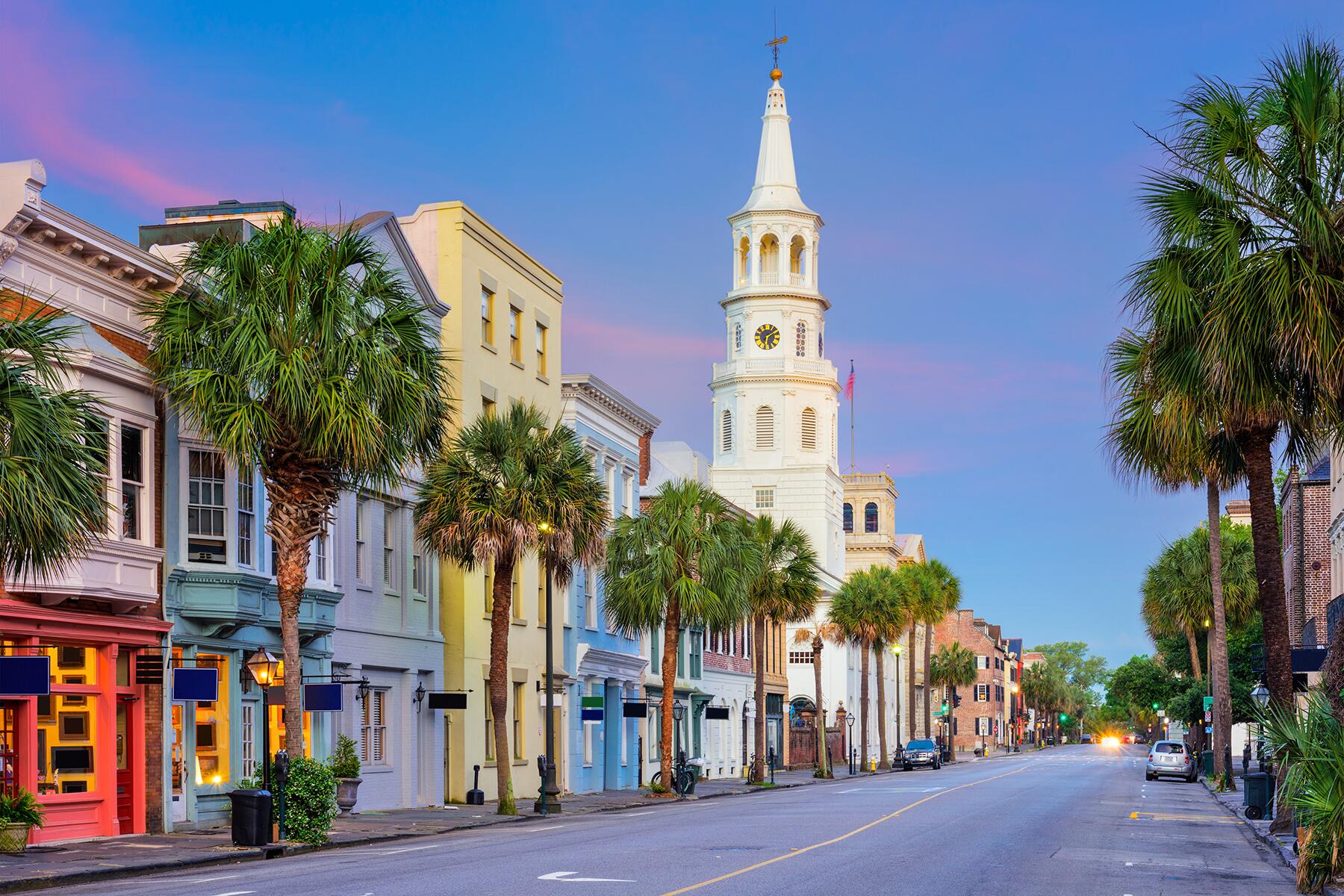

Roughly 40 people move to Charleston every day. Although it’s hard to know how many of them were lured to the city by a single visit, it’s common to hear newcomers say they decided to relocate after a Lowcountry vacation that felt all too short. In other words, there’s no guarantee that this five-day agenda will satisfy your every Charleston desire, but it ought to come close.
Day 1: South Broad, the Battery, and City Market
To understand Charleston today, visitors should seek to learn about its past. On your first day in the city, visit the Charleston Museum, which bills itself as the country’s first museum, and the South Carolina Historical Society Museum; both do an admirable job of familiarizing visitors with rice—the crop that made Charleston one of the wealthiest cities in the world—as well as the legacy of chattel slavery that was deeply entwined with it. The former also offers an engaging overview of Charleston’s role in the Civil War, while the latter is strong on Charleston-specific popular culture, including Porgy & Bess.
But the can’t-miss museum on the peninsula is the International African American Museum, located on the site of the wharf where 40 percent of enslaved people in America entered the country. The museum, devoted to the history and art of the African diaspora, opened in 2023.
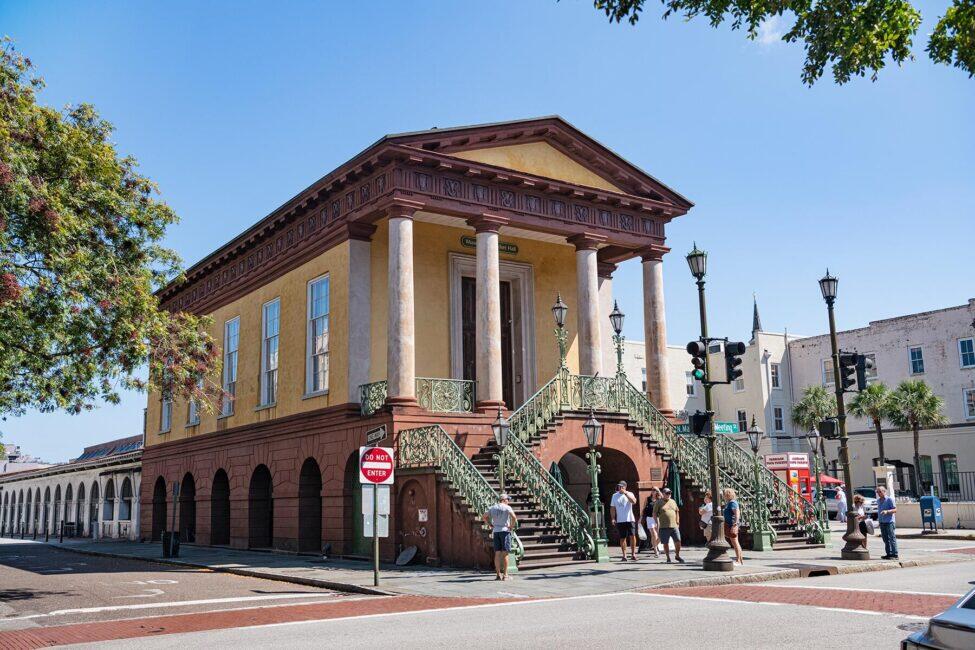
Following a museum tour or two, consider renting a bike to cover the ground from Marion Square to White Point Gardens, the portion of the peninsula that’s seared in the hearts of history buffs and architecture admirers. In addition to hidden gardens and tucked-away graveyards, the area boasts stunning views of Charleston Harbor and the old City Market, a popular source of souvenirs. Rather than just gaping at the magnificent homes, enhance your ogling by downloading the Historic Charleston Foundation’s free self-guided tour app, featuring stories of the city’s African American, women’s, and LGBTQ+ history.
Top Picks for You

Recommended Fodor’s Video
Day 2: Plantation History
After breakfasting on shrimp hash browns at the waterfront Marina Variety Store, cross the Ashley River to delve into the nation’s foundations at a series of former plantations. A good place to start is McLeod Plantation Historic Site, a former sea island cotton farm built on the backs of enslaved men and women. Unlike other plantation sites open to the public, McLeod is administered by the county parks department and is dedicated solely to the stories and experiences of the enslaved people who lived and worked on the property. It’s also considered an important Gullah heritage site. Continue on to Drayton Hall, home to one of the oldest African American burying grounds still in use, where the unfurnished plantation home and stark grounds facilitate quiet reflection. End your tour at Middleton House, which in 1970 began the process of confronting the brutality that enabled its outward splendor; a tour focusing on the lives of the enslaved people who lived there is offered multiple times a day. Make reservations for dinner at Middleton Place Restaurant, set on its current course by legendary chef and cookbook author, the late Edna Lewis.
Day 3: Folly Beach and Sullivan’s Island
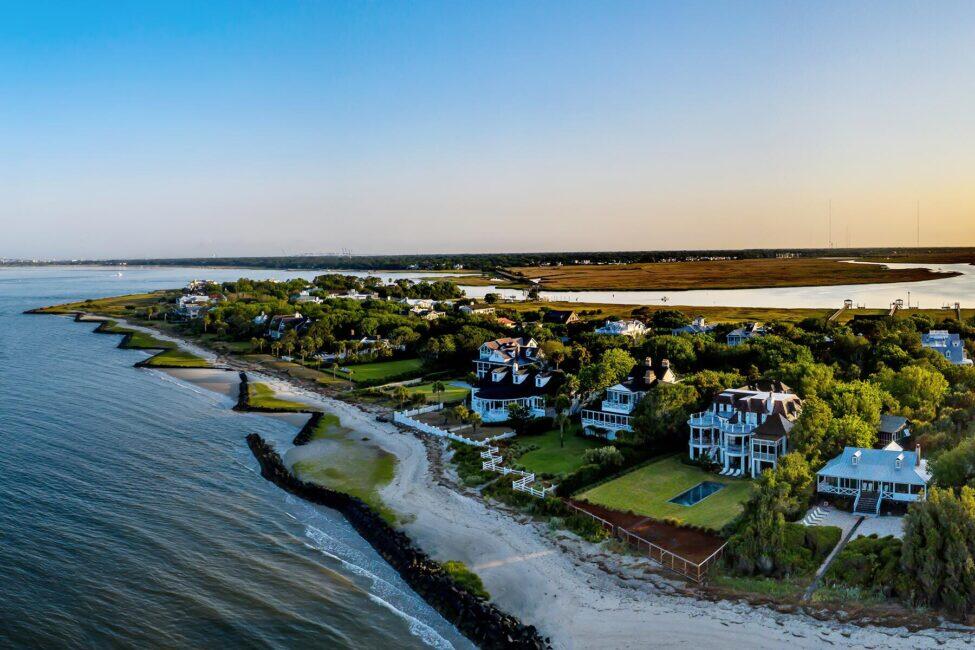
Get ready for a beach day in Charleston. Spend the morning lounging and swimming at Folly Beach. If thrashing in the surf doesn’t appeal, consider devoting the morning to a paddleboard session at Isle of Palms or board a boat at Shem Creek for a shark tooth-hunting expedition.
After the beach, consider bypassing the crowds at Fort Sumter and partaking in the Charleston area’s purest military history experience at Fort Moultrie National Park on Sullivan’s Island, where you can freely roam through a warren of fortifications dating back to the Revolutionary War and explore a command center set up in World War II to ward off submarine attacks. The fort’s museum covers the shore’s role in national defense over the centuries, along with its history as an entry point for enslaved West Africans. It’s estimated that nearly half of African Americans can trace their roots back to this port; a bench erected by the Toni Morrison Society commemorates those who survived the Middle Passage and those who were lost. Sullivan’s Island is also a lovely spot to stroll and dine; Jacques Larson’s The Obstinate Daughter is outstanding, especially if you have a weakness for well-made clam pizza.
Day 4: Parks and Barbecue
Pockets of serenity are scattered across Charleston in the form of public parks, the largest of which is the stunning Hampton Park. Encircled by a paved 1-mile loop that almost exactly traces the Washington Race Course (a capital of 19th-century horse-racing), Hampton Park is distinguished by gardens, ponds, and structures built for the South Carolina Inter-State and West Indian Exposition, a fair that in 1901 drew more than half a million people to the site. Another unmissable local example of 19th-century landscaping is Magnolia Cemetery, which should satisfy every visitor’s appetite for the Southern Gothic.
One of the touchstones of Southern cuisine, barbecue can largely be traced back to enslaved people, but Charleston was relatively late to the commercial barbecue game: it was initially an expansion market for the Bessingers, who pioneered their signature yellow sauce in the Midlands. But lately the city has emerged as a smoked meat mecca, drawing some of the country’s best pitmasters, including James Beard Award–winning Rodney Scott, who learned the whole hog trade at his family’s place in Hemingway. Eaters who care deeply about barbecue can take advantage of the proximate locations of Rodney Scott’s BBQ, Lewis Barbecue, and Home Team BBQ for an unforgettable extended meal. Just north of the barbecue trifecta is Charleston’s growing brewery district for those who want to sample local suds; those who favor spirits may want to swing by High Wire Distilling Co., which has earned acclaim for its work with the state’s heirloom grains, such as Jimmy Red corn.
Day 5: King Street and North Charleston
Brunch is so beloved in the Charleston area that most restaurants don’t confine the service to Sunday: Millers All Day can be counted on for fried chicken biscuits and bloody Marys any day of the week. After brunch, while you could spend a day gallery hopping downtown, it’s hard to beat the exhibits at the Gibbes Museum of Art. Highlights range from the large, including the Beaux Arts building itself, to the very small (the Gibbes is home to the finest collection of American miniature portraits in the country).
Additionally, many visitors choose to pay their respects at Mother Emanuel AME, where nine worshippers in 2015 were massacred by a white supremacist.
You can spend the better part of a day shopping. Downtown Charleston retail is clustered along King Street, ranging from chichi boutiques at the southern end to upscale chains toward the north.