20 Best Sights in Cape Peninsula, South Africa

Background Illustration for Sights

We've compiled the best of the best in Cape Peninsula - browse our top choices for the top things to see or do during your stay.

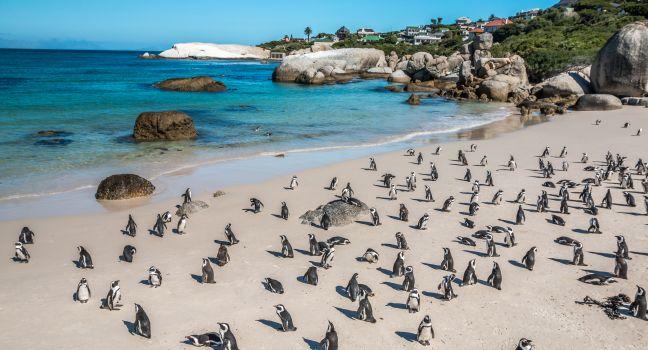
Boulders Penguin Colony

Fodor's Choice
Penguin Colony - Boulders Beach, Cape Town, South Africa
Pocholo Calapre / Shutterstock

Part of Table Mountain National Park, a cove sits between giant granite boulders toward the southern outskirts of Simon's Town that's been set aside to protect one of the world's last colonies of African penguins. Here they strut, waddle, swim, flex, parade, primp, preen, breed, nest, snuggle, squawk, and bray like donkeys (hence their nickname, jackass penguins). You can visit the colony via a series of wooden boardwalks, but come early to avoid the frequent busloads of tourists. If you want to avoid the crowds altogether, there are a few penguins on Boulders Beach (which also charges a fee, but is an absolutely glorious and pristine little swimming beach) or on Seaforth Beach. Remember to obey all signs requesting that you leave the penguins in peace, and don't step over fences or try to touch the penguins—they can bite. That said, don't be surprised if a wandering bird comes waddling up to your beach blanket to take a closer look, as they are innately curious.

Cape Point

Fodor's Choice
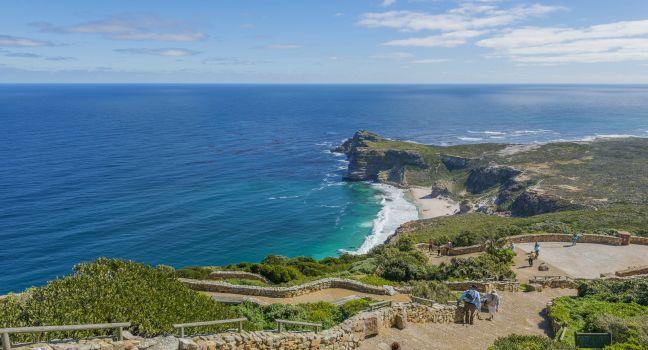
Cape Point, which is the most South Western Point of Africa. Located near the city of Cape Town, South Africa. Towering cliffs overlooking the ocean makes it a year round tourist hot spot; Shutterstock ID 245790346; Project/Title: Top 100 Cape Town; Downlo
Soft Focus Photography / Shutterstock

Cape Point is a dramatic knife's edge of rock that slices into the Atlantic. Looking out to sea from one of the many viewing platforms, you'll feel like you're at the tip of Africa, even though that honor officially belongs to another dramatic point at Cape Agulhas, some 160 km (100 miles) to the southeast. From Cape Point the views of False Bay and the distant Hottentots Holland Mountains are astonishing—as is the sheer magnitude of the rock face jutting into the wild sea. The sense of wildness is magnified by the squawks and cries of seabirds that dance in the thermals above the ocean. The walk up to the viewing platform and the old lighthouse is very steep and very gratifying. If you’re short on time, or don't have the stomach for an on-foot ascent, the Flying Dutchman Funicular, named after a legendary ghost ship, leaves from the lower station at the Cape Point car park, taking passengers to the upper lighthouse every few minutes for a fee. However you go up, take a jacket or sweater as the wind can be fierce, and weather can change suddenly.

It took six years, from 1913 to 1919, to build the old lighthouse, 816 feet above the high-water mark. On a clear day the old lighthouse was a great navigational mark, but when the mists rolled in it was useless, so a new and much lower lighthouse (286 feet) was built at Dias Lookout Point. The newer, revolving lighthouse, the most powerful on the South African coast, emits a group of three flashes every 30 seconds and has prevented numerous shipwrecks. You can't go into either lighthouse, but the views from their bases are spectacular.

Stark reminders of the ships that didn't make it are dotted around the Cape. You'll see their rusty remains on some of the beaches. One of the more famous wrecks is the Thomas T. Tucker, one of hundreds of Liberty Ships produced by the United States to enable the Allies to move vast amounts of supplies during World War II. It wasn't the German U-boats patrolling the coastline that did the ship in, it was the fog, and on her maiden voyage in 1942, it ended up on Olifantsbos Point. Fortunately, all on board were saved, but the wreck soon broke up in the rough seas that pound the coast. The mast you see on the western slopes of Cape Point near the lighthouse belongs to the Global Atmosphere Watch Station (GAW). The South African Weather Bureau, together with the Fraunhofer Institute in Garmisch, Germany, maintains a research laboratory here to monitor long-term changes in the chemistry of the earth's atmosphere, which may impact climate. This is one of 20 GAWs throughout the world, chosen because the air at Cape Point is considered particularly pure most of the time.

During peak season (December–January), visit Cape Point as early as possible to avoid the crowds. There's a shop, a snack kiosk, and the Two Ocean Restaurant, which affords gorgeous views but an overpriced, half-decent menu (you'd be better off dining in Kalk Bay).

The best way to experience the park is to hike on one of the numerous walking trails (favorites include the boardwalk trail to Diaz Beach and the shipwreck trail) and/or enjoy a picnic and dip at the Bordjiesrif or Buffels Bay tidal pools, or on Platboom or Oliphantsbos beaches. A fantastic alternative is to stay overnight in the comfortable basic accommodations, booked through South African National Parks.

Driving from the main entrance to the Cape Point parking area will take around 15 minutes. Within the park, you can also drive or hike to Cape of Good Hope (Africa's most southwesterly point, but nowhere near as dramatic as Cape Point), and there are several turn-offs onto circular drives and toward less-touristy viewpoints or simply for a chance to appreciate the fynbos and potentially see wild animals; the reserve is signposted throughout and there is no dangerous wildlife (aside from snakes), so getting out of your car is perfectly fine, just remember to lock doors and keep food out of view lest you tempt baboons.  Do not feed nor in any way tempt or tease baboons, which are under threat and often food-deprived and consequently can be aggressive. They can also open car doors and will swoop down quickly to take packets from your clutches if given half a chance.

off M65 (Plateau Rd.) / M5 (Main Rd.), Cape Town, 7848, South Africa
021-780–9010-Thurs.–Sun. only
Sight Details
R455 park entrance; R90/R110 funicular one-way/return ticket

Something incorrect in this review?

Llandudno Beach

Llandudno Fodor's Choice

The residential neighborhood of Llandudno is known for its far-flung, virtually off-the-map location and for its large number of expensive, sea-facing houses; people commute from here to Cape Town. It's also pretty much just around the corner from Hout Bay, so it's a good place to come if you're based there but want a proper beach experience that includes swimming and a bit of a vibe. There are lifeguards, which is good because the current can take you by surprise; the beach also sees many surfers. Parking can be a pain as there's precious little of it, so arrive early––and take supplies for a picnic on the beach, as there's nothing for sale. There's a rocky headland known as Sunset Rocks which is, obviously, just gorgeous for watching the sun sink at the end of the day (as late as 9 pm in summer). Even if you see locals jumping off the boulders into the sea, avoid copying them––folks have died hitting their heads on rocks under the water. Amenities: parking (no fee); toilets. Best for: surfing; swimming; walking.

Hargrave Ave., Cape Town, 7806, South Africa

Something incorrect in this review?

Recommended Fodor's Video

Chapman's Peak Drive

Considered one of the world’s best marine drives, this 9-km (5½-mile) stretch of road (take note that this is a toll road) winding between Hout Bay and Noordhoek is carved from the rock along a treacherous cliff-edge coastline. Its 114 bends and curves skirt the 593-meter-high (1,945-foot-high) southerly extension of Constantiaberg, affording exhilarating views and making it a sought-after location for international car commercials. Begun in 1910 and built during the First World War, it took a crew of 700 convicts to chip and blast the road out of the rock. It officially opened in 1922 with views rivaling those of California's Pacific Route 1. About one-third of the road passes below exhilaratingly steep cliffs with loose rocks and dodgy-looking boulders as much as 280 meters (919 feet) overhead.

You can access the drive from either Hout Bay or Noordhoek, with the tollgate installed nearest the Hout Bay end. Take it slow and try to take it all in as you carefully navigate those curves. There are places to pull over and stare out to sea or to park while you hike up the fynbos-covered mountains. Beware of any wind when you stand on the edge and note that rockslides and unstable cliff faces mean this entire drive can occasionally be closed for maintenance, or during severe weather and wind events. Another thing to watch out for is the hordes of cyclists who traverse the route and seldom adhere to the single-file rule.

Chapman's Peak Drive, Hout Bay, South Africa
021-791–8220
Sight Details
R64 one-way

Something incorrect in this review?

Danger Beach

This beach is a well-known surf spot because of its riptides and large waves, hence its name. For safety's sake, it's recommended that people swim in the tidal pools, farther along the beach. This small strip of beach can be accessed via the subway, underneath the railway. What the beach lacks in amenities it makes up for in peacefulness and good waves for surfing. Amenities: none. Best for: surfing.

Main Rd., St James, South Africa

Something incorrect in this review?

Fish Hoek Beach

With the southern corner protected from southeasters by Elsie's Peak, this sandy beach attracts retirees and families with young kids, who appreciate the calm, clear water—it may be the safest swimming beach on the Cape, although sharks are sighted fairly regularly in the bay between September and March (though that doesn't stop people from swimming, surfing, and boogie boarding here); shark spotters are employed to keep an eye out and warn beachgoers. The middle and northern end of the beach are also popular with catamaran sailors and windsurfers, who often stage regattas offshore. The snorkeling is good, and it's a great beach for boogie boarding. It's also one of the best places to see whales during calving season—approximately August to November—though there have been whale sightings as early as June and as late as January. Amenities: food and drink; lifeguards; parking (fee); showers; toilets; water sports. Best for: surfing; swimming; walking; windsurfing.

Beach Rd., Fish Hoek, 7974, South Africa

Something incorrect in this review?

Hout Bay Beach

Cradled in a lovely bay of the same name and guarded by a 1,000-foot peak known as the Sentinel, Hout Bay is the center of Cape Town's crayfishing industry (legal and otherwise) and operates several fish-processing plants. It also has knockout views of the mountains, gentle surf, and easy access to the restaurants and bars of Mariner's Wharf. The fact that this is a working harbor combined with the flow of raw sewage into the sea, means this is, unfortunately, a polluted beach, however beautiful it looks. While walks are fine, you're advised not to swim here. Amenities: food and drink; parking (free). Best for: solitude; walking.

Imhoff Farm

This historic Cape farmstead offers a hodgepodge of shops and activities, including an excellent if small wineshop, a deli-style farm stall, several decent casual restaurants and boutiques, and various animal-related attractions that children will love, including a petting farm with creatures large and small, and horse rides (this is where you can sign up for horseback riding along the beach).

Long and Noordhoek Beaches

A vast expanse of white sand stretching 6½ km (4 miles) from the base of Chapman's Peak (Noordhoek Beach starts here) to Kommetjie (where you find Long Beach), this is one of the wildest and least populated stretches of uninterrupted beach, with fluffy white sand and dunes, behind which sit a lagoon and private nature reserve. Because of the wind and the space, these beaches attract horseback riders and walkers rather than sunbathers, and the surfing is excellent (especially off Long Beach). There are no lifeguards and there is no bus service, and, as at some other beaches, at the wrong times and more isolated spots, there are real safety concerns (particularly the lonely stretch of sand right in the middle). Despite patrollers on horseback and the occasional all-terrain vehicle, crime is an issue here, and women, in particular, should be careful. Tourists always do best not to look like tourists. Hang out with other people, just in case, unless you're part of a group. Amenities: parking (no fee); toilets (Noordhoek). Best for: solitude; sunset; surfing; walking.

Noordhoek, 7975, South Africa

Something incorrect in this review?

Muizenberg Beach

Once the fashionable resort of South African high society, this beach is now the place where locals—from all corners of Cape Town—swim, picnic, and learn to surf. A long, sandy beach with a reliable break, this grand old lady of the city’s (relatively) warm-water beaches is known for the colorful bathing boxes of the type once popular at British resorts. Lifeguards are on duty, and the sea is shallow and reasonably safe—and there is reliable shark spotting. If you're keen on stretching your legs, you can walk along the beach or take the picturesque concrete promenade known as the Catwalk, which connects Muizenberg to St James. Be careful not to walk the latter path alone or when it is very quiet or dark, and be extra vigilant as there have been muggings involving stone-throwing. Amenities: food and drink; lifeguards; parking (fee); showers; toilets; water sports. Best for: sunrise; surfing; swimming; walking.

Off M4, Muizenberg, 7950, South Africa

Something incorrect in this review?

Noordhoek Farm Village

This collection of restaurants, art galleries, and boutiques is a great place to spend a few hours or get a quick bite to eat while passing through. There's a deli with everything you could possibly need for a picnic or to stock a self-catering cottage, and The Roost coffee shop is a popular gathering point for the multitudes of cyclists who traverse Chapman's Peak on weekends. The Noordhoek Village Hotel is on the property, and there's a hot yoga studio and an open-air market (mostly food) on Wednesday evenings.

Scratch Patch

Opened in 1970, this gemstone factory invites visitors to fill a bag (you pay according to the size of the bag) with semiprecious stones that you pick from a garden filled ankle-deep with tiger’s eye, rose quartz, amethyst, jasper, agates, crystals, and the like. There's also miniature golf, as well as Mineral World, where you can buy gemstone jewelry or observe the factory's operations from a metal boardwalk that overlooks the various machines.

Dido Valley Rd., Simon's Town, South Africa
021-786–2020
Sight Details
Free; bag of gemstones from R35

Something incorrect in this review?

Slangkoppunt Lighthouse

Slangkoppunt translated literally means "snakehead point," and at 111 feet, this is the tallest cast-iron tower on South Africa's coast, and the views are incredible. Located almost exactly midway between Robben Island and Cape Point, the lighthouse has a 5-million-candlepower light and a range of 30 nautical miles. Since the lamp was officially lit in 1919, it has been capable of producing four flashes every 30 seconds. It’s one of the few lighthouses in the world still manned by a keeper—known these days as a "lighthouse officer." Tours of the lighthouse are available, but it is sometimes found to be closed even during its normal "working" hours (10 am to 3 pm). If you're alone or not in a big group, this is a safer place to walk than Long Beach.

South African Naval Museum

By far the best of the town's various museums, this rather detailed space is filled with model ships, antique navigational equipment, old South African Navy divers' equipment, a few actual life-size boats, and, oddly enough, a helicopter. Interesting, too, are the murals in the old naval church, and some of the stories of rescue missions and naval heroes over the years. The newer "Transformation" section includes a display about the SS Mendi and information about how the navy has changed in democratic South Africa. It's staffed by passionate naval personnel, so you can come armed with intricate questions.

St James Beach

Known for its brightly colored Victorian-style bathing boxes, this stretch of sand has tidal pools that are great for exploring with children; the shallow pools make for safer and warmer swimming, too. A sheltered cove from the wind and convenient location near the St James train station means this beach gets incredibly busy in summer and on weekends. Parking is a nightmare on busy days, so plan your visit carefully. Amenities: toilets. Best for: swimming.

Main Rd., St James, South Africa

Something incorrect in this review?

St James Catholic Church

St James gets its name from this historical church, built in 1858 for the Catholic Filipino fishermen of Kalk Bay, who at the time petitioned the colonial governor of the Cape to build this church as a remedy for the hazardous journey they had to make to Simon's Town each Sunday, by sea or by road. The community built the church themselves and the church steps were documented to have been built from stone taken from the mountain in St James. The church is largely unchanged and still operational with a daily morning Mass (times on the website); the building is not open to the public outside of Mass.

80 Main Rd., St James, 7945, South Africa
021-788–1275

Something incorrect in this review?

Warrior Toy Museum

A glorified shop with a collection of Dinky Toys (diecast model vehicles), boats, trains, soldiers, airplanes, some 4,000 model cars, and 500 dolls, this place it likely to appeal more to grown-ups reminiscing about toys from a bygone era than it will be of any real interest to today's digital children. The miniature cars, trains, and tanks date from the 1920s to the present, and the owner is always keen to sell what's available in his collectibles shop.

1067 King George Way, Simon's Town, South Africa
021-786–1395
Sight Details
R10
Closed Mon.

Something incorrect in this review?

World of Birds

This sanctuary has more than 400 species of indigenous and exotic birds, including eagles, vultures, penguins, and flamingos. With neither bars nor nets separating you from most of the birds, you can get some pretty good photographs; however, the big raptors are (wisely) kept behind fences. The "monkey jungle" has around three-dozen highly inquisitive (and very agile and fast) squirrel monkeys that roam freely, often alighting on your shoulders or back (sometimes stealing your loose belongings). There's also a reptile section and some small mammals (like meerkats and raccoons)––as with its birds, many of the animals are rescues, and there's an animal hospital, orphanage, and facilities for breeding threatened species. There's also a small jungle gym for children.

Café Roux

Noordhoek

Nestled behind Chapman's Peak—and minutes away from Noordhoek Beach—Café Roux is an unpretentious outdoor café with great homemade food and fabulous South African wines at competitive prices. You can get a taste of rural Cape Town life in "paddock" country here.

Chapman's Peak Dr., Cape Town, 7979, South Africa
021-789–2538

Something incorrect in this review?

Olympia Café

The Olympia Café, with a menu of Mediterranean-influenced specialities, is popular and usually packed to capacity, especially on weekends. At the affiliated bakery just around the corner, you can buy take-away cappuccinos and pasties filled with springbok and sometimes even rabbit. The croissants are more bread-like than light French pastry. Grab a stool at the bar by the window and watch the ocean and passing foot-traffic on the pavement in front of you.

134 Main Rd., Kalk Bay, 7975, South Africa
021-788–6396

Something incorrect in this review?