


Piazza del Popolo
Get FREE email communications from Fodor's Travel, covering must-see travel destinations, expert trip planning advice, and travel inspiration to fuel your passion.

We've compiled the best of the best in Villa Borghese, Piazza del Popolo, and Flaminio - browse our top choices for the top things to see or do during your stay.
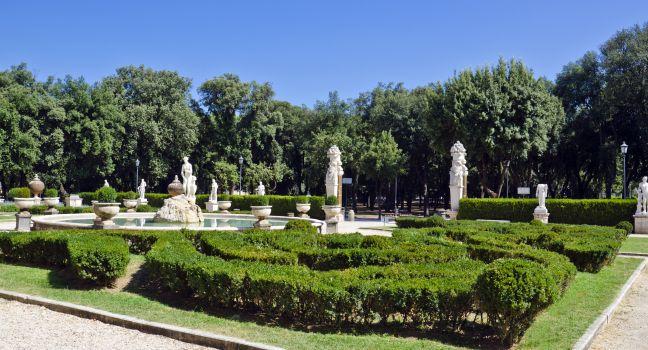
Rome's Central Park, the Villa Borghese was originally laid out as a recreational garden in the early 17th century by Cardinal Scipione Borghese. The word "villa" was used to mean suburban estate, of the type developed by the ancient Romans and adopted by Renaissance nobles. Today's gardens cover a much smaller area—by 1630, the perimeter wall was almost 5 km (3 miles) long. At the end of the 18th century, Scottish painter Jacob More remodeled the gardens into the English style popular at the time. In addition to the gloriously restored Galleria Borghese, the highlights of the park are Piazza di Siena, a graceful amphitheater, and the botanical garden on Via Canonica, where there is a pretty little lake as well as the neoclassical faux–Temple of Aesculapius, the Biopark zoo, Rome's own replica of London's Globe Theatre, and the Villa Giulia museum.
The Carlo Bilotti Museum ( www.museocarlobilotti.it) is particularly attractive for Giorgio de Chirico fans, and there is more modern art in the nearby Galleria Nazionale d'Arte Moderna e Contemporanea. The 63-seat children's movie theater, Cinema dei Piccoli, shows films for adults in the evening. There's also Casa del Cinema, where film buffs can screen films or sit at the sleek, cherry-red, indoor-outdoor caffè (you can find a schedule of events at www.casadelcinema.it).
Redolent of the era of Henry James and Edith Wharton, the Pincian gardens have long been a classic setting for a walk. Grand Tourists—and even a pope or two—came here to see and be seen among the beau monde of Rome. Today, the Pincian terrace remains a favorite spot for locals taking a springtime Sunday stroll. The rather formal, early-19th-century style contrasts with the far more elaborate terraced gardens of Lucullus, the Roman gourmand who held legendary banquets here. Today, off-white marble busts of Italian Risorgimento heroes and artists line the pathways. Along with similar busts on the Gianicolo (Janiculum Hill), their noses have been targets of vandalism.
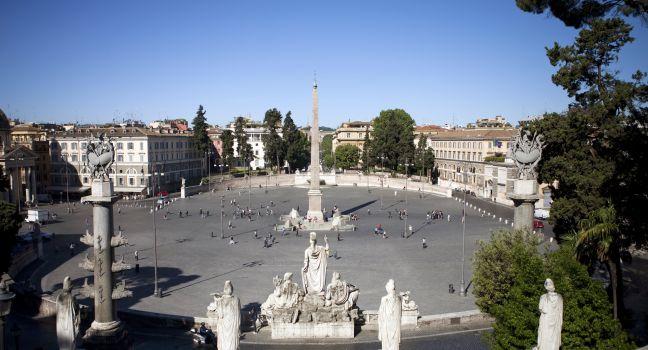
A stretch of ancient walls separates the Pincio from the southwest corner of Villa Borghese. From the balustraded terrace, you can look down at Piazza del Popolo and beyond, surveying much of Rome. Southeast of the Pincian terrace is the Casina Valadier ( www.casinavaladier.it), a magnificently decorated neoclassical building that contains an event space with glorious views.
This zoo has been remodeled along eco-friendly lines: there is now more space for the animals, most of which were brought from other zoos or born from animals already in captivity (rather than those snatched from the wild). There aren't any koalas, pandas, or polar bears, but there are big cats, elephants, chimpanzees, and local brown bears from Abruzzo, and other creatures. You'll also find the Reptilarium, the Bioparco Train, a picnic area next to the flamingos, and a farm.
Framed by two squat, circular towers, this gate was constructed at the beginning of the 5th century during a renovation of the 3rd century Aurelian Walls. Here you can see just how well the walls have been preserved and imagine hordes of Visigoths trying to break through them. Sturdy as they look, these walls couldn't always keep out the barbarians: Rome was sacked three times during the 5th century alone.


