


Israel Museum
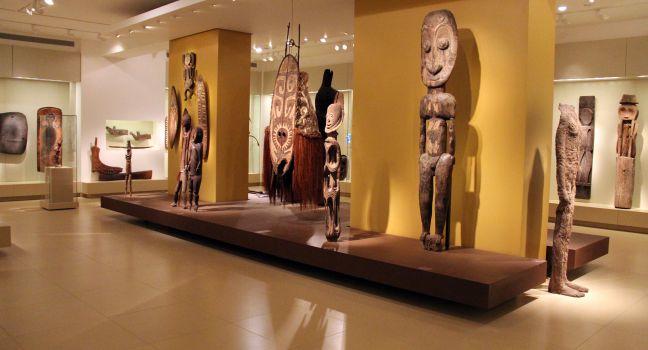
This world-class museum shines after a massive makeover that brought modern exhibits and state-of-the-art technology. The Dead Sea Scrolls are certainly the museum's most important collection. A Bedouin boy discovered the first of the 2,000-year-old parchments in 1947 in a Judean Desert cave, overlooking the Dead Sea. Of the nine main scrolls and bags full of small fragments that surfaced over the years, many of the most important and most complete are preserved here; the Antiquities Authority holds the rest of the parchments, and a unique copper scroll is in Jordan. The white dome of the Shrine of the Book, the separate pavilion in which the scrolls are housed, was inspired by the lids of the clay jars in which the first ones were found.
The scrolls were written in the Second Temple period by a fiercely zealous, separatist, and monastic Jewish sect, widely identified as the Essenes. Archaeological, laboratory, and textual evidence dates the earliest of the scrolls to the 2nd century BC; none could have been written later than AD 68, the year in which their home community, known today as Qumran, was destroyed by the Romans. The parchments, still in an extraordinary state of preservation because of the dryness of the Dead Sea region, contain the oldest Hebrew manuscripts of the Old Testament ever found, authenticating the almost identical Hebrew texts still in use today. The sectarian literature provides an insight into this esoteric community. The early-medieval Aleppo Codex, on display in the small lower gallery under the white dome, is considered the most authoritative text of the Hebrew Bible in existence.
The quarter-acre outdoor 1:50 scale model, adjacent to the Shrine of the Book, represents Jerusalem as it was on the eve of the Great Revolt against Rome (AD 66). It was designed in the mid-1960s by the late Professor Michael Avi-Yonah, who relied on considerable data gleaned from Roman-period historians, important Jewish texts, and even the New Testament, and based some of his generic reconstructions (villas, a theater, markets, etc.) on Roman structures that have survived across the ancient empire. Later archaeological excavations have sometimes confirmed and sometimes challenged Avi-Yonah's sharp intuition, and the model has been updated occasionally to incorporate new knowledge. The available audio guide is a worthwhile aid in deciphering the site.
Taken together, the Dead Sea Scrolls, the huge model, and Roman-period exhibits in the Archaeology Wing evoke the turbulent and historically momentous Second Temple period. That was the era from which Christianity emerged; when the Romans razed the Temple in Jerusalem, it compelled a slow revolution in Jewish life and religious practice that has defined Judaism to this day.
The Archaeology Wing highlights many artifacts (in the Canaanite, Israelite, and Hellenistic-Roman sections) that offer evocative illustrations of familiar biblical texts. Don't miss the small side rooms devoted to glass, coins, and the Hebrew script.
Jewish Art and Life is the name for the wing made up mostly of finely wrought Jewish ceremonial objects (Judaica) from widely disparate communities. The "synagogue route" includes reconstructed old synagogues from India, Germany, Italy, and Suriname.
The Art Wing is a slightly confusing maze spread over different levels, but if you have patience and time, the payoff is great. Older European art rubs shoulders with modern works, contemporary Israeli art, design, and photography. Landscape architect Isamu Noguchi designed the open-air Art Garden. Crunch over the gravel amid works by Daumier, Rodin, Moore, Picasso, and local luminaries.
The Youth Wing mounts one major new exhibition a year, interactive and often adult-friendly, designed to encourage children to appreciate the arts and the world around them, or to be creative in a crafts workshop. Parents with younger kids will also be grateful for the outdoor play areas.
The vegetarian/dairy café, Offaime, is a great place for a light meal or coffee. The more expensive Modern has tempting meat and fish combinations and remains open beyond museum hours. The lockers and ATM in the museum's entrance hall are useful. Large bags or packs have to be checked. Photography (without flash) is allowed everywhere except in the Shrine of the Book. Check the website for summer days with longer hours and free entrance for kids.


