5 Best Sights in West Jerusalem, Jerusalem

Background Illustration for Sights

We've compiled the best of the best in West Jerusalem - browse our top choices for the top things to see or do during your stay.

Israel Museum

Fodor's Choice
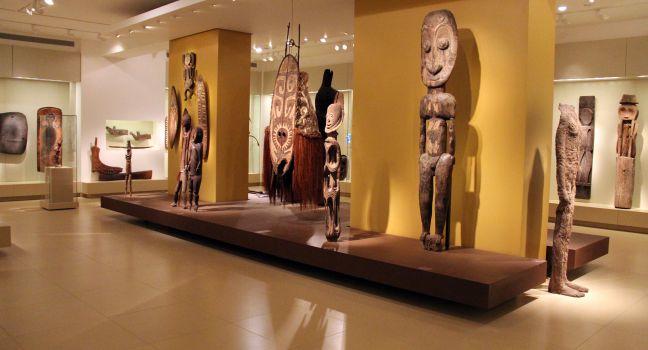
In one of the halls of the Israel Museum in Jerusalem.
Flik47 | Dreamstime.com

This world-class museum shines after a massive makeover that brought modern exhibits and state-of-the-art technology. The Dead Sea Scrolls are certainly the museum's most important collection. A Bedouin boy discovered the first of the 2,000-year-old parchments in 1947 in a Judean Desert cave, overlooking the Dead Sea. Of the nine main scrolls and bags full of small fragments that surfaced over the years, many of the most important and most complete are preserved here; the Antiquities Authority holds the rest of the parchments, and a unique copper scroll is in Jordan. The white dome of the Shrine of the Book, the separate pavilion in which the scrolls are housed, was inspired by the lids of the clay jars in which the first ones were found.

The scrolls were written in the Second Temple period by a fiercely zealous, separatist, and monastic Jewish sect, widely identified as the Essenes. Archaeological, laboratory, and textual evidence dates the earliest of the scrolls to the 2nd century BC; none could have been written later than AD 68, the year in which their home community, known today as Qumran, was destroyed by the Romans. The parchments, still in an extraordinary state of preservation because of the dryness of the Dead Sea region, contain the oldest Hebrew manuscripts of the Old Testament ever found, authenticating the almost identical Hebrew texts still in use today. The sectarian literature provides an insight into this esoteric community. The early-medieval Aleppo Codex, on display in the small lower gallery under the white dome, is considered the most authoritative text of the Hebrew Bible in existence.

The quarter-acre outdoor 1:50 scale model, adjacent to the Shrine of the Book, represents Jerusalem as it was on the eve of the Great Revolt against Rome (AD 66). It was designed in the mid-1960s by the late Professor Michael Avi-Yonah, who relied on considerable data gleaned from Roman-period historians, important Jewish texts, and even the New Testament, and based some of his generic reconstructions (villas, a theater, markets, etc.) on Roman structures that have survived across the ancient empire. Later archaeological excavations have sometimes confirmed and sometimes challenged Avi-Yonah's sharp intuition, and the model has been updated occasionally to incorporate new knowledge. The available audio guide is a worthwhile aid in deciphering the site.

Taken together, the Dead Sea Scrolls, the huge model, and Roman-period exhibits in the Archaeology Wing evoke the turbulent and historically momentous Second Temple period. That was the era from which Christianity emerged; when the Romans razed the Temple in Jerusalem, it compelled a slow revolution in Jewish life and religious practice that has defined Judaism to this day.

The Archaeology Wing highlights many artifacts (in the Canaanite, Israelite, and Hellenistic-Roman sections) that offer evocative illustrations of familiar biblical texts. Don't miss the small side rooms devoted to glass, coins, and the Hebrew script.

Jewish Art and Life is the name for the wing made up mostly of finely wrought Jewish ceremonial objects (Judaica) from widely disparate communities. The "synagogue route" includes reconstructed old synagogues from India, Germany, Italy, and Suriname.

The Art Wing is a slightly confusing maze spread over different levels, but if you have patience and time, the payoff is great. Older European art rubs shoulders with modern works, contemporary Israeli art, design, and photography. Landscape architect Isamu Noguchi designed the open-air Art Garden. Crunch over the gravel amid works by Daumier, Rodin, Moore, Picasso, and local luminaries.

The Youth Wing mounts one major new exhibition a year, interactive and often adult-friendly, designed to encourage children to appreciate the arts and the world around them, or to be creative in a crafts workshop. Parents with younger kids will also be grateful for the outdoor play areas.

The vegetarian/dairy café, Offaime, is a great place for a light meal or coffee. The more expensive Modern has tempting meat and fish combinations and remains open beyond museum hours. The lockers and ATM in the museum's entrance hall are useful. Large bags or packs have to be checked. Photography (without flash) is allowed everywhere except in the Shrine of the Book. Check the website for summer days with longer hours and free entrance for kids.
Yad Vashem

Fodor's Choice
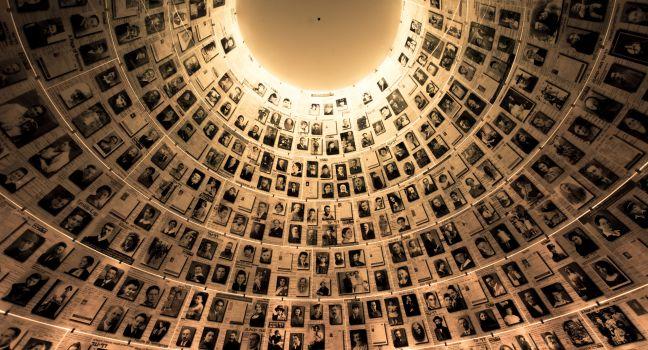
Yad Vashem in Jerusalem,Israel.It's a world center for Holocaust research, documentation, education and commemoration to the 6 million Jewish victims.
Blitzkoenig | Dreamstime.com

The experience of the Holocaust—the annihilation of six million Jews by the Nazis during World War II—is so deeply seared into the national psyche that understanding it goes a long way toward understanding Israelis themselves. Yad Vashem was created in 1953 by an act of the Knesset, and charged with preserving a record of those times. The multifaceted campus includes a museum, an archive and research facility, an energetic education department, art galleries, and numerous monuments. (The name Yad Vashem—“a memorial and a name"—comes from the biblical book of Isaiah [56:5].) The Israeli government has made a tradition of bringing almost all high-ranking official foreign guests to visit the place.

The riveting Holocaust History Museum—a well-lit, 200-yard-long triangular concrete "prism"—is the centerpiece of the site. Powerful visual and audiovisual techniques in a series of galleries document Jewish life in Europe before the catastrophe and follow the escalation of persecution and internment to the hideous climax of the Nazi's "Final Solution." Video interviews and personal artifacts individualize the experience.

Note that children under 10 are not admitted, photography is not allowed in the exhibition areas, and large bags have to be checked.

The small Children's Memorial is dedicated to the 1½ million Jewish children murdered by the Nazis. Architect Moshe Safdie wanted to convey the enormity of the crime without numbing the visitor's emotions or losing sight of the victims' individualities. The result is a single dark room, lit by just a few candles infinitely reflected in hundreds of mirrors. Recorded narrators intone the names, ages, and countries of origin of known victims. The effect is electrifying. Also focusing on children is a poignant exhibition called "No Child's Play," about children's activities during the Holocaust. It's in an art museum beyond the exit of the Holocaust History Museum.

The Avenue of the Righteous encircles Yad Vashem with thousands of trees marked with the names of Gentiles in Europe who risked and sometimes lost their lives trying to save Jews from the Nazis. Raoul Wallenberg, King Christian X of Denmark, Corrie ten Boom, Oskar Schindler, and American journalist Varian Fry are among the more famous honorees. The Hall of Remembrance is a heavy basalt-and-concrete building that houses an eternal flame, with the names of the death camps and main concentration camps in relief on the floor.

A detour takes you to the Valley of the Communities at the bottom of the hill, where large, rough-hewn limestone boulders divide the site into a series of small, man-made canyons. Each clearing represents a region of Nazi Europe, laid out geographically. The names of some 5,000 destroyed Jewish communities are inscribed in the stone walls, with larger letters highlighting those that were particularly important in prewar Europe.

There is an information booth (be sure to buy the inexpensive map of the site), a bookstore, and a cafeteria at the entrance. Allow about two hours to see the Holocaust History Museum, more if you rent an audio guide. Visits to the history museum must be reserved online. If your time is short, be sure to see the Children's Memorial and the Avenue of the Righteous. To avoid the biggest crowds, come first thing in the morning or around noon. The site is an easy 10-minute walk or a quick free shuttle from the Mount Herzl intersection, which in turn is served by many city bus lines and the light-rail.

Ein Kerem

Fodor's Choice

The neighborhood of Ein Kerem still retains much of its old village character. Tree-framed stone houses spill across its hillsides with a pleasing Mediterranean nonchalance. Artists and professionals who have joined the older working-class population over the last 40 or 50 years have marvelously renovated many homes and made an effort to keep most developers at bay. Back alleys provide an off-the-beaten-path feel, and occasionally a serendipitous art or craft studio.

Tradition identifies Ein Kerem as the birthplace of John the Baptist, and its most prominent landmarks are the orange-roofed Church of St. John the Baptist in the heart of the village, the Church of the Visitation up the hillside above the Spring of the Virgin—both Roman Catholic—and the gold-domed Russian church above that along the road to Hadassah Hospital. The neighborhood is served by city Bus 28 from Mount Herzl. There is free underground parking in the neighborhood center. Ein Kerem is less than five minutes from Mount Herzl by bus or taxi, and about 15 minutes by taxi from Downtown.

Recommended Fodor's Video

Israel Aquarium

Fodor's Choice

Officially the Gottesman Family Israel Aquarium Jerusalem, this new spot is the first public aquarium in Israel. You can combine a visit with the Tisch Family Zoological Gardens next door and see all kinds of aquatic life from the Mediterranean Sea to the Red Sea's coral reefs and beyond. The museum is dedicated to the conservation of Israel's marine habitats, and its modern exhibits have high-tech digital displays. A devoted and knowledgeable staff guides visitors through the experience. Public transportation reaches as far as the Zoo's main entrance.

Tisch Family Zoological Gardens

Fodor's Choice

Spread over a scenic 62-acre ridge among Jerusalem's hilly southern neighborhoods, this zoo has many of the usual species that delight zoo visitors everywhere: monkeys and elephants, snakes and birds, and all the rest. But it goes much further, focusing on two groups of wildlife. The first is creatures mentioned in the Bible that have become locally extinct, some as recently as the 20th century. Among these are Asian lions, bears, cheetahs, the Nile crocodile, and the Persian fallow deer. The second focus is on endangered species worldwide, among them the Asian elephant and rare macaws.

This is a wonderful place to let kids expend some energy—there are lawns and playground equipment—and allow adults some downtime from touring. Early morning and late afternoon are the best hours in summer; budget 2½ hours to see (almost) everything. A wagon train does the rounds of the zoo, at a nominal fee of NIS 3 (not on Saturday and Jewish holidays). The Noah's Ark Visitors Center has a movie and computer programs; check the zoo website for animal feeding times. The zoo is served by city routes 26A (from Central Bus Station) and 33 (from Mount Herzl). The ride is about 30 minutes; a cab would take 15 minutes from Downtown hotels.