4 Best Sights in West Jerusalem, Jerusalem

Background Illustration for Sights

We've compiled the best of the best in West Jerusalem - browse our top choices for the top things to see or do during your stay.

Yad Vashem

Fodor's Choice
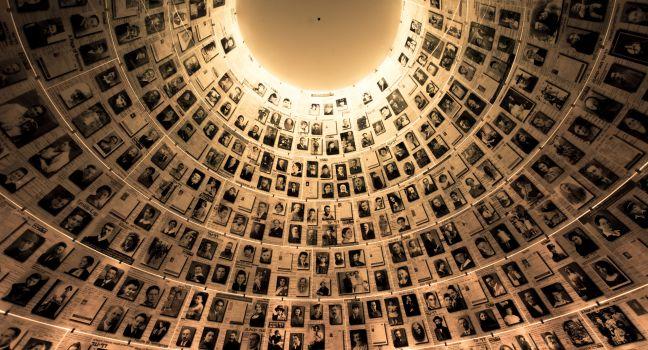
Yad Vashem in Jerusalem,Israel.It's a world center for Holocaust research, documentation, education and commemoration to the 6 million Jewish victims.
Blitzkoenig | Dreamstime.com

The experience of the Holocaust—the annihilation of six million Jews by the Nazis during World War II—is so deeply seared into the national psyche that understanding it goes a long way toward understanding Israelis themselves. Yad Vashem was created in 1953 by an act of the Knesset, and charged with preserving a record of those times. The multifaceted campus includes a museum, an archive and research facility, an energetic education department, art galleries, and numerous monuments. (The name Yad Vashem—“a memorial and a name"—comes from the biblical book of Isaiah [56:5].) The Israeli government has made a tradition of bringing almost all high-ranking official foreign guests to visit the place.

The riveting Holocaust History Museum—a well-lit, 200-yard-long triangular concrete "prism"—is the centerpiece of the site. Powerful visual and audiovisual techniques in a series of galleries document Jewish life in Europe before the catastrophe and follow the escalation of persecution and internment to the hideous climax of the Nazi's "Final Solution." Video interviews and personal artifacts individualize the experience.

Note that children under 10 are not admitted, photography is not allowed in the exhibition areas, and large bags have to be checked.

The small Children's Memorial is dedicated to the 1½ million Jewish children murdered by the Nazis. Architect Moshe Safdie wanted to convey the enormity of the crime without numbing the visitor's emotions or losing sight of the victims' individualities. The result is a single dark room, lit by just a few candles infinitely reflected in hundreds of mirrors. Recorded narrators intone the names, ages, and countries of origin of known victims. The effect is electrifying. Also focusing on children is a poignant exhibition called "No Child's Play," about children's activities during the Holocaust. It's in an art museum beyond the exit of the Holocaust History Museum.

The Avenue of the Righteous encircles Yad Vashem with thousands of trees marked with the names of Gentiles in Europe who risked and sometimes lost their lives trying to save Jews from the Nazis. Raoul Wallenberg, King Christian X of Denmark, Corrie ten Boom, Oskar Schindler, and American journalist Varian Fry are among the more famous honorees. The Hall of Remembrance is a heavy basalt-and-concrete building that houses an eternal flame, with the names of the death camps and main concentration camps in relief on the floor.

A detour takes you to the Valley of the Communities at the bottom of the hill, where large, rough-hewn limestone boulders divide the site into a series of small, man-made canyons. Each clearing represents a region of Nazi Europe, laid out geographically. The names of some 5,000 destroyed Jewish communities are inscribed in the stone walls, with larger letters highlighting those that were particularly important in prewar Europe.

There is an information booth (be sure to buy the inexpensive map of the site), a bookstore, and a cafeteria at the entrance. Allow about two hours to see the Holocaust History Museum, more if you rent an audio guide. Visits to the history museum must be reserved online. If your time is short, be sure to see the Children's Memorial and the Avenue of the Righteous. To avoid the biggest crowds, come first thing in the morning or around noon. The site is an easy 10-minute walk or a quick free shuttle from the Mount Herzl intersection, which in turn is served by many city bus lines and the light-rail.

Church of St. John the Baptist

The village of Ein Kerem is not mentioned by name in the New Testament, but its identification as the birthplace of John the Baptist is a tradition that apparently goes back to the Byzantine period (5th century AD). The grotto associated with that event is enshrined in the large, late-17th-century Franciscan church that bears his name, its orange tile roof a prominent landmark in the heart of Ein Kerem. The walls of the sanctuary are covered in age-darkened paintings and glazed tiles.

Homat Ha Tsalafim St., n/a, Israel
02-632–3000
Sight Details
Free

Something incorrect in this review?

Church of the Visitation

Built over what is thought to have been the home of John the Baptist's parents, Zechariah and Elizabeth, this church sits high up the hillside in Ein Kerem, with a wonderful view of the valley and the surrounding wooded hills. It is a short but stiff walk up from the spring at the center of the village. When Mary, pregnant with Jesus, came to visit her cousin, the aging Elizabeth, who was also with child, "the babe leaped in [Elizabeth's] womb" with joy at recognizing the unborn Jesus. Mary thereupon pronounced the paean to God known as the Magnificat ("My soul doth magnify the Lord" [Luke 1]). One wall of the church courtyard is covered with ceramic tiles quoting the Magnificat in 41 languages. The upper church is adorned with large wall paintings depicting the mantles with which Mary has been endowed—Mother of God, Refuge of Sinners, Dispenser of All Grace, Help of Christians—as well as the Immaculate Conception. Other frescoes depict Hebrew women of the Bible also known for their "hymns and canticles," as the Franciscan guide puts it. Ring the bell for entry on Saturday.

Madreigot Habikur, n/a, Israel
02-641–7291
Sight Details
Free

Something incorrect in this review?

Recommended Fodor's Video

Knesset

Both the name of Israel's one-chamber parliament and its number of seats (120) were taken from Haknesset Hagedolah, the Great Assembly of the Second Temple period, some 2,000 years ago. The free hour-long public tour, offered Sunday and Thursday, includes the session hall and three enormous, brilliantly colored tapestries designed by Marc Chagall on the subjects of the Creation, the Exodus, and Jerusalem. Arrive at least 30 minutes before the tour (especially in summer, when the lines are longer), and be sure to bring your passport. Bags and cameras have to be deposited with security. On other days, when in session, Knesset proceedings (conducted in Hebrew) are open to the public—call ahead to verify. There are a wide range of other in-depth tours available to the public Sunday through Thursday.

Across the road from the Knesset main gate is a 14-foot-high, four-ton bronze menorah, based on the one that once stood within the sanctuary of the ancient temple in Jerusalem. The seven-branch candelabrum was adopted soon after independence as the official symbol of the modern State of Israel. This one, designed by sculptor Benno Elkan, and given as a gift by British parliamentarians to the Knesset in 1956, is decorated with bas-relief depictions of events and personages in Jewish history, from biblical times to the modern day. Behind the menorah is the Wohl Rose Garden, which has hundreds of varieties of roses, many lawns for children to romp on, and adult-friendly nooks in its upper section; it is under construction through December 2023.