


Santa Maria della Vittoria
Get FREE email communications from Fodor's Travel, covering must-see travel destinations, expert trip planning advice, and travel inspiration to fuel your passion.

We've compiled the best of the best in Repubblica and Quirinale - browse our top choices for the top things to see or do during your stay.
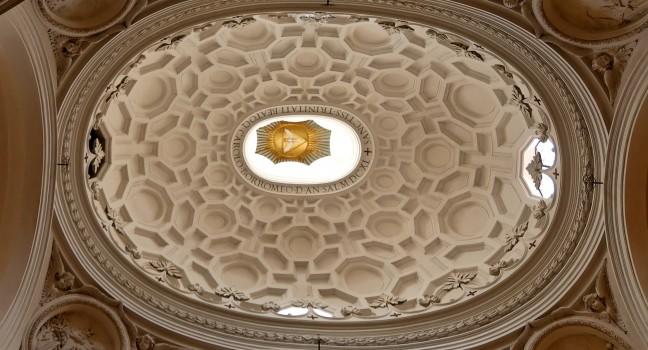
Sometimes known as San Carlino because of its tiny size, this is one of Borromini's masterpieces. In a space no larger than the base of one of the piers of St. Peter's Basilica, he created a church that is an intricate exercise in geometric perfection, with a coffered dome that seems to float above the curves of the walls. Borromini's work is often bizarre, definitely intellectual, and intensely concerned with pure form. In San Carlo, he invented an original treatment of space that creates an effect of rippling movement, especially evident in the double-S curves of the facade. Characteristically, the interior decoration is subdued, in white stucco with no more than a few touches of gilding, so as not to distract from the form. Don't miss the cloister: a tiny, understated Baroque jewel, with a graceful portico and loggia above, echoing the lines of the church.
Designed by Bernini, this small church is one of the triumphs of the Roman Baroque period. His son wrote that Bernini considered it his best work and that he used to come here occasionally, just to sit and contemplate. Bernini's simple oval plan, a classic form in Baroque architecture, is given drama and movement by the decoration, which depicts St. Andrew's martyrdom and ascension into heaven and starts with the painting over the high altar, up past the figure of the saint above, to the angels at the base of the lantern and the dove of the Holy Spirit that awaits on high.
The curving brick facade on the northeast side of Piazza della Repubblica is one small remnant of the colossal Terme di Diocleziano, the largest and most impressive of the baths of ancient Rome. A gift to the city from Emperor Diocletian, the complex was completed in AD 306. In 1561 Michelangelo was commissioned to convert the vast frigidarium, the central hall of the baths, into a church. His work was later altered by Vanvitelli in the 18th century, but the huge transept, which formed the nave in Michelangelo's plan, has remained. The eight enormous monolithic columns of red granite that support the great beams are the original columns of the tepidarium, 45 feet high and more than 5 feet in diameter. The great hall is 92 feet high.


