14 Best Sights in Villa Borghese, Piazza del Popolo, and Flaminio, Rome

Background Illustration for Sights

We've compiled the best of the best in Villa Borghese, Piazza del Popolo, and Flaminio - browse our top choices for the top things to see or do during your stay.

Galleria Borghese

Villa Borghese Fodor's Choice
Villa Borghese, Galleria Borghese, Roma, Italy.
Khirman Vladimir / Shutterstock

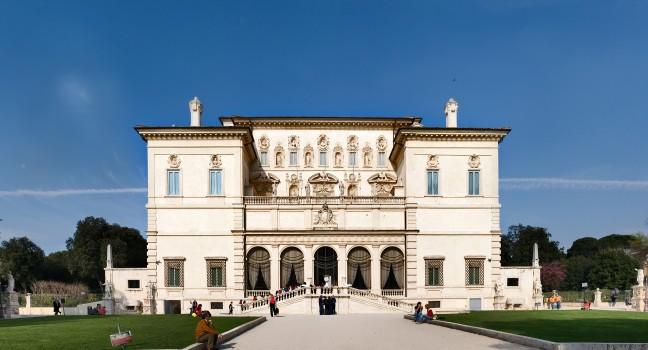
It's toss-up as to which is more magnificent: the museum or the art that lies within it. The luxury-loving Cardinal Scipione Borghese had the museum custom built in 1612 as a showcase for his collection of both antiquities and more "modern" works, including those he commissioned from the masters Caravaggio and Bernini. Today, it's a monument to Roman interior decoration at its most extravagant.

One of the collection's most famous works is Canova's neoclassical sculpture Pauline Borghese as Venus Victorious. The next three rooms hold three key early Baroque sculptures: Bernini's David; Apollo and Daphne; and The Rape of Persephone. All were done when the artist was in his twenties and all illustrate his extraordinary skill. Apollo and Daphne shows the moment when, to aid her escape from the pursuing Apollo, Daphne is turned into a laurel tree. Leaves and twigs sprout from her fingertips as she stretches agonizingly away from Apollo. In The Rape of Persephone, Pluto has either just plucked Persephone (or Proserpina) from her flower-picking or is in the process of returning to Hades with his prize. Note the realistic way his grip causes dimples in Persephone's flesh. This is the stuff that makes the Baroque exciting—and moving. Other Berninis on view include a large, unfinished figure called Verità, or Truth.

Room 8 contains six paintings by Caravaggio, the hotheaded genius who died at age 37. All of his paintings, even the charming Boy with a Basket of Fruit, have an undercurrent of darkness. The disquieting Sick Bacchus is a self-portrait of the artist who, like the god, had a fondness for wine. David and Goliath, painted in the last year of Caravaggio's life—while he was on the run, murder charges hanging over his head—includes his self-portrait in the head of Goliath. Upstairs, the Pinacoteca (Picture Gallery) boasts paintings by Raphael (including his moving Deposition), Pinturicchio, Perugino, Bellini, and Rubens. Probably the gallery's most famous painting is Titian's allegorical Sacred and Profane Love, a mysterious image with two female figures, one nude, one clothed.  Admission to the Galleria Borghese is by reservation only. Visitors are admitted in two-hour shifts 9–5. Prime-time slots sell out days in advance, so reserve directly (and early) through the museum's website.
Piazzale Scipione Borghese, 5, Rome, 00197, Italy
06-32810-reservations
Sight Details
€15, including €2 reservation fee; increased fee during temporary exhibitions
Closed Mon.
Reservations essential

Something incorrect in this review?

MAXXI—Museo Nazionale delle Arti del XXI Secolo

Flaminio Fodor's Choice
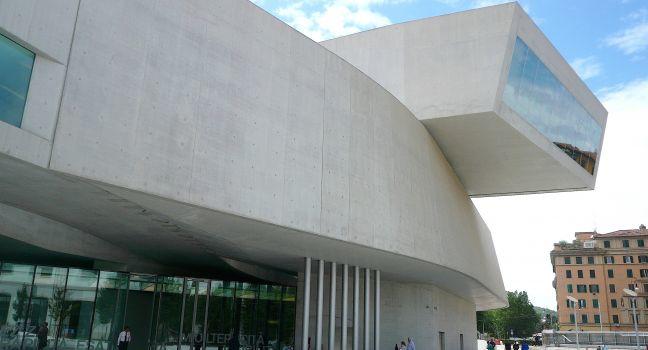
MAXXI, national museum of arts of XXI century by Zaha Hadid architect in Rome, Italy.
(c) Enrysacc | Dreamstime.com

Designed by the late Iraqi-British architect Zaha Hadid, this modern building plays with lots of natural light and has curving and angular lines, big open spaces, glass ceilings, and steel staircases that twist through the air—all meant to question the division between "within" and "without." The MAXXI hosts temporary exhibitions of art, architecture, film, and more. The permanent collection, displayed on a rotating basis, has more than 350 works from modern and contemporary artists, including Andy Warhol, Francesco Clemente, and Gerhard Richter.

Via Guido Reni, 4/A, Rome, 00196, Italy
06-3201954
Sight Details
€15
Closed Mon.

Something incorrect in this review?

Museo Nazionale Etrusco di Villa Giulia

Villa Borghese Fodor's Choice
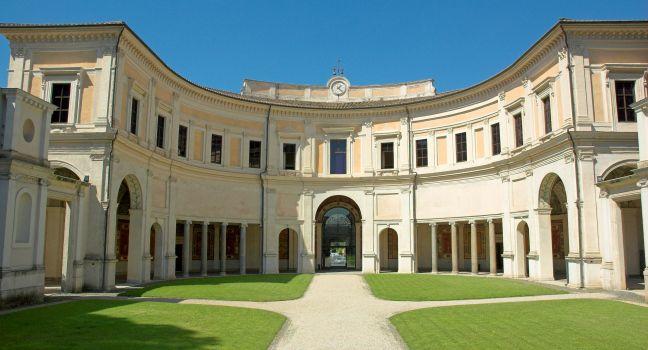
Museo Etrusco di villa giulia
(c) Mariocarbone | Dreamstime.com

The world's most outstanding collection of Etruscan art and artifacts is housed in Villa Giulia, built around 1551 for Pope Julius III. Among the team called in to plan and construct the villa were Michelangelo and fellow Florentine Vasari. Most of the actual work, however, was done by Vignola and Ammannati. The villa's nymphaeum—or sunken sculpture garden—is a superb example of a refined late-Renaissance setting for princely pleasures.

No one knows precisely where the Etruscans originated, but many scholars maintain they came from Asia Minor, appearing in Italy about 2000 BC and creating a civilization that was a dazzling prelude to that of the ancient Romans. Among the most striking pieces are the terra-cotta statues, such as the Apollo of Veii and the serenely beautiful Sarcophagus of the Spouses. Dating from 530–500 BC, this couple (or Sposi) look at the viewer with almond eyes and archaic smiles, suggesting an openness and joie de vivre rare in Roman art. Other highlights include the cinematic frieze from a later temple (480 BC) in Pyrgi, resembling a sort of Etruscan Elgin marbles in terra-cotta; the displays of Etruscan jewelry; and the beautiful gardens.

Piazzale di Villa Giulia, 9, Rome, 00196, Italy
06-3226571
Sight Details
€12
Closed Mon.

Something incorrect in this review?

Recommended Fodor's Video

Piazza del Popolo

Piazza del Popolo Fodor's Choice
piazza del popolo
© Halie Cousineau/ Fodors Travel

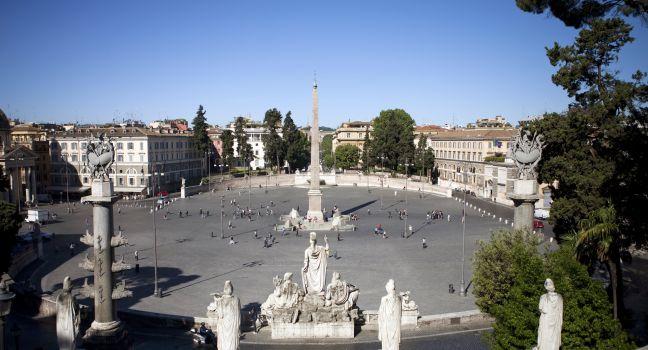
With its obelisk and twin churches, this immense square marks what was, for centuries, Rome's northern entrance, where all roads from the north converged and where visitors, many of them pilgrims, got their first impression of the Eternal City. The desire to make this entrance to Rome something special was a pet project of popes and their architects for more than three centuries. Although it was once crowded with fashionable carriages, the piazza today is a pedestrian zone. At election time, it's the scene of huge political rallies, and on New Year's Eve, Rome stages a mammoth alfresco party here.

Santa Maria del Popolo

Piazza del Popolo Fodor's Choice
The Basilica of Santa Maria del Popolo
© Halie Cousineau/ Fodors Travel

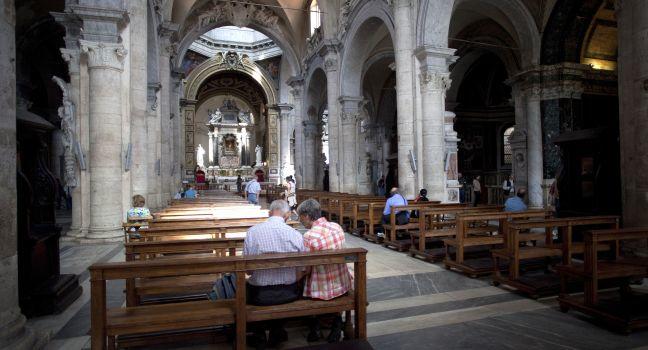
Standing inconspicuously in a corner of the vast Piazza del Popolo, this church often goes unnoticed, but the treasures inside make it a must for art lovers. Bramante enlarged the apse, which was rebuilt in the 15th century on the site of a much older place of worship. Inside, in the first chapel on the right, you'll see some frescoes by Pinturicchio from the mid-15th century; the adjacent Cybo Chapel is a 17th-century exercise in decorative marble.

Raphael designed the famous Chigi Chapel, the second on the left, with vault mosaics—showing God the Father in Benediction—as well as statues of Jonah and Elijah. More than a century later, Bernini added the oval medallions on the tombs and the statues of Daniel and Habakkuk. Finally, the Cerasi Chapel, to the left of the high altar, holds two Caravaggios: The Crucifixion of St. Peter and The Conversion of St. Paul. Exuding drama and realism, both are key early Baroque works that show how "modern" 17th-century art can appear. Compare their style with the much more restrained and classically "pure" Assumption of the Virgin by Annibale Carracci, which hangs over the altar of the chapel.

Villa Borghese

Villa Borghese Fodor's Choice
The Garden of Venus, In Villa Borghese, Rome, Italy.
Preisler | Dreamstime.com

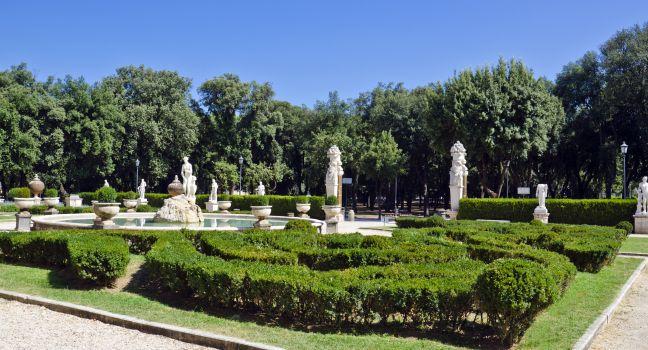
Rome's Central Park, the Villa Borghese was originally laid out as a recreational garden in the early 17th century by Cardinal Scipione Borghese. The word "villa" was used to mean suburban estate, of the type developed by the ancient Romans and adopted by Renaissance nobles. Today's gardens cover a much smaller area—by 1630, the perimeter wall was almost 5 km (3 miles) long. At the end of the 18th century, Scottish painter Jacob More remodeled the gardens into the English style popular at the time. In addition to the gloriously restored Galleria Borghese, the highlights of the park are Piazza di Siena, a graceful amphitheater, and the botanical garden on Via Canonica, where there is a pretty little lake as well as the neoclassical faux–Temple of Aesculapius, the Biopark zoo, Rome's own replica of London's Globe Theatre, and the Villa Giulia museum.

The Carlo Bilotti Museum ( www.museocarlobilotti.it) is particularly attractive for Giorgio de Chirico fans, and there is more modern art in the nearby Galleria Nazionale d'Arte Moderna e Contemporanea. The 63-seat children's movie theater, Cinema dei Piccoli, shows films for adults in the evening. There's also Casa del Cinema, where film buffs can screen films or sit at the sleek, cherry-red, indoor-outdoor caffè (you can find a schedule of events at  www.casadelcinema.it).

Galleria Nazionale d'Arte Moderna e Contemporanea

Villa Borghese Fodor's Choice

This massive white Beaux-Arts building, built for the 1911 World Exposition in Rome, contains one of Italy's leading collections of 19th- and 20th-century works. It's primarily dedicated to the history of Italian modernism, examining the movement's development over the last two centuries, but crowd-pleasers Monet, Rodin, Van Gogh, and Warhol put in appearances, and there's also an outstanding Dadaist collection. You can mix coffee and culture at the mid-century-inspired Caffè delle Arti in a columned alcove.

Pincio Promenade

Villa Borghese Fodor's Choice

Redolent of the era of Henry James and Edith Wharton, the Pincian gardens have long been a classic setting for a walk. Grand Tourists—and even a pope or two—came here to see and be seen among the beau monde of Rome. Today, the Pincian terrace remains a favorite spot for locals taking a springtime Sunday stroll. The rather formal, early-19th-century style contrasts with the far more elaborate terraced gardens of Lucullus, the Roman gourmand who held legendary banquets here. Today, off-white marble busts of Italian Risorgimento heroes and artists line the pathways. Along with similar busts on the Gianicolo (Janiculum Hill), their noses have been targets of vandalism.

A stretch of ancient walls separates the Pincio from the southwest corner of Villa Borghese. From the balustraded terrace, you can look down at Piazza del Popolo and beyond, surveying much of Rome. Southeast of the Pincian terrace is the Casina Valadier ( www.casinavaladier.it), a magnificently decorated neoclassical building that contains an event space with glorious views.

Piazzale Napoleone I and Viale dell'Obelisco, Rome, 00187, Italy

Something incorrect in this review?

Villa Medici

Villa Borghese Fodor's Choice

Originally belonging to Cardinal Ferdinando I de' Medici, who also laid out the immaculate Renaissance garden to set off his sculpture collection, this villa was purchased by Napoléon to create the French Academy of Rome, opened in 1803, where artists could study Italian art and put it toward the (French) national good. You can visit during special exhibitions or take a guided tour to see the gardens and the incredibly picturesque garden facade, which is studded with Mannerist and Rococo sculpted reliefs and overlooks a loggia with a beautiful fountain devoted to Mercury. Some of the historic rooms have been restyled by Fendi and Paris-based designer India Mahdavi.

Viale della Trinità dei Monti, 1, Rome, 00187, Italy
06-6761200
Sight Details
€10, exhibits; €14, includes guided tour of the gardens and historic rooms and exhibit
Closed Tues.

Something incorrect in this review?

Bioparco

Villa Borghese

This zoo has been remodeled along eco-friendly lines: there is now more space for the animals, most of which were brought from other zoos or born from animals already in captivity (rather than those snatched from the wild). There aren't any koalas, pandas, or polar bears, but there are big cats, elephants, chimpanzees, and local brown bears from Abruzzo, and other creatures. You'll also find the Reptilarium, the Bioparco Train, a picnic area next to the flamingos, and a farm.

Piazzale del Giardino Zoologico, 1, Rome, 00197, Italy
06-3608211
Sight Details
€19; €2 for Bioparco Train

Something incorrect in this review?

Porta del Popolo

Piazza del Popolo

The medieval gate in the Aurelian walls was replaced by the current one between 1562 and 1565, by Nanni di Bacco Bigio. Bernini further embellished the inner facade in 1655 for the much-heralded arrival of Queen Christina of Sweden, who had abdicated her throne to become a Roman Catholic.

Piazza del Popolo and Piazzale Flaminio, Rome, 00187, Italy

Something incorrect in this review?

Porta Pinciana

Villa Borghese

Framed by two squat, circular towers, this gate was constructed at the beginning of the 5th century during a renovation of the 3rd century Aurelian Walls. Here you can see just how well the walls have been preserved and imagine hordes of Visigoths trying to break through them. Sturdy as they look, these walls couldn't always keep out the barbarians: Rome was sacked three times during the 5th century alone.

Piazzale Brasile, Rome, 00187, Italy

Something incorrect in this review?

Santa Maria dei Miracoli

Piazza del Popolo

A twin to Santa Maria in Montesanto, this church dedicated to Our Lady of the Miracles was built in the 1670s, started by Carlo Rainaldi and completed by Bernini and Carlo Fontana as an elegant frame for the entrance to Via del Corso from Piazza del Popolo. Inside, there is a gorgeous stucco designed by Bernini pupil Antonio Raggi.

Santa Maria in Montesanto

Piazza del Popolo

On the eastern side of the Piazza del Popolo, Santa Maria dei Miracoli's Baroque "twin church" was built in the 1660s–70s. It was originally designed by Carlo Rainaldi and finished by Carlo Fontana, who was supervised by his brilliant teacher, Bernini (whose other pupils are responsible for the saints topping the facade). On the last Sunday of the month from October to June, a Mass is held in tribute to artists, with live musical accompaniment, earning the church its nickname of the Church of the Artists.

Piazza del Popolo, 18, Rome, 00187, Italy
06-3610594
Sight Details
Closed Sat.

Something incorrect in this review?