7 Best Sights in Canal Rings, Amsterdam

Background Illustration for Sights

We've compiled the best of the best in Canal Rings - browse our top choices for the top things to see or do during your stay.

Anne Frankhuis

Fodor's Choice
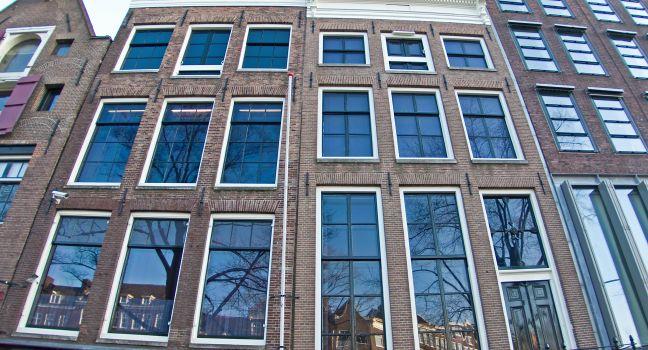
The house of Anne Frank in Amsterdam.
(c) Petervangraafeiland | Dreamstime.com

In the pages of The Diary of Anne Frank (published posthumously in 1947 by her father, Otto, as The Annex—the title she had chosen), the young Anne recorded two increasingly fraught years living in secret, in a warren of rooms at the back of this 1635 canal house, hidden from the Nazis. Anne was born in Germany in 1929; when she was four, her family moved to the Netherlands to escape growing anti-Jewish sentiment. They made a life in their adopted city until the threat of war in Europe increased. After repeated attempts to emigrate to England, Australia, Chile, and the United States failed and the war reached the Netherlands in 1940, Anne's father Frank took his wife and daughters into hiding in July 1942, the day after Anne's sister Margot received the call to report for a German work camp. A week later they were joined by the Van Pels family: Auguste, Hermann, and their son, Peter. Four months later, dentist Fritz Pfeffer moved in.

The five adults and three children sought refuge in the attic of the rear annex, or achterhuis, of Otto's pectin business in the center of Amsterdam. The entrance to the flat was hidden behind a hinged bookcase. Here, like many onderduikers ("people in hiding") throughout Amsterdam, Anne dreamed her dreams, wrote her diary, and pinned up movie-star pictures to her wall (still on view). Five of Otto's trusted employees provided them with food and supplies. In her diary, Anne chronicles the day-to-day life in the house: her longing for a best friend, her crush on Peter, her frustration with her mother, her love for her father, and her annoyance with the petty dentist, who was called Dussel in her diary. In August 1944, the Franks were betrayed, and the Gestapo invaded their hideaway. All the members of the annex were transported to camps. Anne and Margot died of typhoid in Bergen-Belsen a few months before the liberation. Otto Frank was the only survivor of the annex. Miep Gies, one of the friends who helped with the hiding, found Anne's diary after the raid and kept it through the war. Now, millions of people read its tale of humanity's struggle with fascism. A major renovation was completed in 2018 to provide more historical context. Every Tuesday at 10am CEST all tickets become available for a visit six weeks later.

Because of crowds, you must now buy a timed ticket online (through the official website only) before you visit---every Tuesday at 10 am (local Amsterdam time) all tickets become available for a visit six weeks later. 
Magere Brug

Fodor's Choice
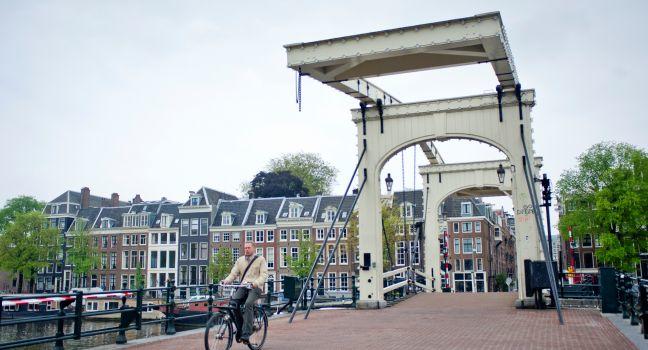
Bridge, Magere Brug, Amsterdam, Holland
© Zach Nelson / Fodors Travel

Of Amsterdam's 60-plus drawbridges, this is the most famous, and it provides gorgeous views of the Amstel and surrounding area. It's said to have been first built in the 1660s, around the time of the construction of the Eastern Canal Ring. While there are many theories about the origins of its name, the most colorful tells a tale of two sisters living on opposite sides of the Amstel who wanted an efficient way of sharing that grandest of Dutch traditions: the gezellige (socially cozy) midmorning coffee break. Whether "mager" referred to their surname, slim physiques, or possibly even their miserliness, we'll never know. Walk by at night when it's spectacularly lighted. Many replacements to the narrow original bridge have come and gone; the current one dates from 1931 but bears a close resemblance to the 19th-century design.

Between Kerkstraat and Nieuwe Kerkstraat, 1018 EK, Netherlands

Something incorrect in this review?

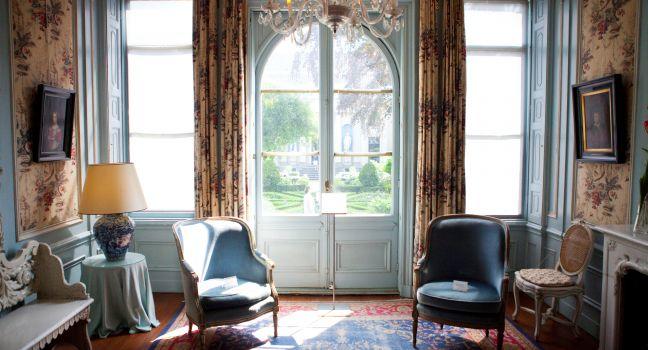
Museum van Loon

Fodor's Choice
Museum van Loon, Amsterdam, Holland
© Halie Cousineau / Fodors Travel

Once home to one of Rembrandt's most successful students, Ferdinand Bol, this house and its twin next door (No. 674) were built in 1672 by Adriaen Dortsman and extensively remodeled in the 18th century by Abraham van Hagan and his wife, Catherina Tripp, whose names are entwined in the ornate brass balustrade on the staircase. House No. 672 was occupied by the powerful Van Loon family from 1886 to 1960. After extensive restoration to return it to its glory of the 18th century, the house was opened as a museum in the 1970s. The elegant salons include many Van Loon portraits and possessions, including paintings known as witjes, or grisailles—illusionistic depictions of landscapes and other scenes. The symmetrical garden is a gem. Facing the rear of the house, the restored Grecian-style coach house holds the coach collection and serves tea.

Recommended Fodor's Video

Willet-Holthuysen Museum

Fodor's Choice
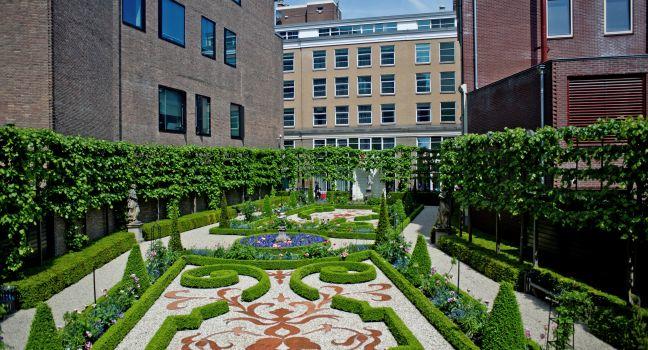
Garden, Willet-Holthuysen Museum, Amsterdam, Holland
© Zach Nelson / Fodors Travel

Visit this house museum for a chance to imagine what it was like to live in a gracious mansion on the Herengracht in the 19th century. In 1895, widow Louisa Willet-Holthuysen bequeathed the house to the city, along with all of its contents—now under the management of the Amsterdam Museum. It's well worth spending an hour or so perusing the interiors and artwork, which include a sumptuous ballroom and a rarities cabinet. You can also lounge in the French Classical–style garden in the back.

FOAM

Fodor's Choice

The Netherlands' most popular photography museum (200,000 visitors a year, and counting) hosts large-scale international photography exhibitions, alongside smaller shows for up-and-coming artists. World-renowned Dutch photographers such as Inez van Lamsweerde, Vinoodh Matadin, Hendrik Kerstens, and Rineke Dijkstra have all had shows here. The shop, café, small library, and museum have a dramatically contemporary interior.

Keizersgracht 609, 1017 DS, Netherlands
020-551–6500
Sight Details
€15

Something incorrect in this review?

Torensluis

Fodor's Choice

A top photo op around the Canal Ring, the Torensluis is the oldest original stone bridge in Amsterdam and the widest of its kind. It was named for the medieval city wall tower that abutted this 17th-century sluice gate (you can still see its outlines in the pavement stones). The rooms with barred windows that you see at the base of the bridge were once a prison.

Singel between Torensteeg and Oude Leliestraat, 1012 VK, Netherlands
Sight Details
Free

Something incorrect in this review?

Westerkerk

Fodor's Choice

Built between 1620 and 1631 by Hendrick de Keyser, the Dutch Renaissance-style Westerkerk was the largest Protestant church in the world until St. Paul's Cathedral in London was built in 1675. The Westerkerk's 85-meter-tall Ouwe Wester, still the tallest church tower in the city, is topped by a bright blue copy of the crown of the Habsburg emperor Maximilian I, who gave Amsterdam the right to use his royal insignia in 1489 in gratitude for support given to the Austro-Burgundian princes.

The church is renowned for its organ and carillon (there are regular lunchtime concerts from March through September). The carillon is played every Tuesday at noon by a real person (a carillonneur) but is automated at other times with different songs tinkling out on the quarter hour, day and night. Anne Frank described the tunes in her diary. Rembrandt, who lived on Rozengracht during his poverty-stricken last years, and his son, Titus, are buried (somewhere) here. The Westertoren (Westerkerk Tower) is a fun climb from April to the end of October, though it's closed for renovations until 2025. 

Prinsengracht 281, 1016 GW, Netherlands
020-624–7766
Sight Details
Interior free
Closed Sat. Oct.–Mar. and Sun. all yr (open for church services only)

Something incorrect in this review?