


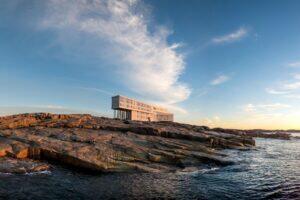
Magnificent mountains, sweeping vistas, colorful wooden houses perched on rocky sea cliffs, hidden fjords, and the deep blue sea define Newfoundland. "The Rock" as the island is sometimes affectionately called, lures visitors with the promise of dramatic landscapes, incredible hiking and outdoor experiences, and the warmth of the people. Canada starts here, from the east, on the island of Newfoundland in the North Atlantic. Labrador, to the northwest, is on the mainland bordering Québec. Along the province’s nearly 17,699 km (11,000 miles) of coastline, humpback whales feed near shore, millions of seabirds nest, and 10,000-year-old icebergs drift by fishing villages.
Off the east coast of Canada, the province of Newfoundland and Labrador, as it is officially called, is a bit of a...
Read MoreMagnificent mountains, sweeping vistas, colorful wooden houses perched on rocky sea cliffs, hidden fjords, and the deep blue sea define Newfoundland. "The Rock" as the island is sometimes affectionately called, lures visitors with the promise of dramatic landscapes, incredible hiking and outdoor experiences, and the warmth of the people. Canada starts here, from the east, on the island of Newfoundland in the North Atlantic. Labrador, to the northwest, is on the mainland bordering Québec. Along the province’s nearly 17,699 km (11,000 miles) of coastline, humpback whales feed near shore, millions of seabirds nest, and 10,000-year-old icebergs drift by fishing villages.
Off the east coast of Canada, the province of Newfoundland and Labrador, as it is officially called, is a bit of a contradiction in terms: it's the youngest province—it joined the Confederation in 1949—but its European timeline stretches back to AD 1000, when Vikings made first landfall on the Great Northern Peninsula. They assembled a sod-hut village at what is now L'Anse aux Meadows National Historic Site, calling their new home Vinland. They stayed less than 10 years and then disappeared into the mists of history. Preceding the Vikings were the Maritime Archaic people who lived in the region as long ago as 6,000 years. L'Anse Amour, a 7,500-year-old burial ground in southern Labrador, is the oldest-known cemetery in North America.
When explorer John Cabot arrived at Bonavista from England in 1497, he reported an ocean so full of fish they could be caught in a basket lowered over the side of a boat. Within a decade, St. John's had become a crowded harbor. Soon, fishing boats from France, England, Spain, and Portugal vied for a chance to catch Newfoundland's lucrative cod, which would shape the province's history.
At one time, 700 outports dotted Newfoundland's coast, devoted to the world's most plentiful fish. Today, only about 400 of these settlements survive. By 1992, cod had become scarce from overfishing and the federal government called a moratorium, throwing thousands of citizens out of work. The moratorium is still in place, forcing generations of people to retrain for other industries or leave, and the fishing industry has since diversified into other species, mainly shrimp and crab. The development of one of the world's richest and largest nickel deposits at Voisey's Bay in northern Labrador, near Nain, holds hope for new prosperity, as does tourism and the growing offshore oil and gas industry.
Despite Newfoundland and Labrador's more than 50 years as a Canadian province, its people remain resolutely independent and maintain a unique language and lifestyle. E. Annie Proulx's Pulitzer Prize–winning novel The Shipping News (1993) brought the province to the world's attention, and Newfoundland writers such as Wayne Johnston (The Colony of Unrequited Dreams, The Navigator of New York), Michael Crummey (River Thieves and Galore), and Lisa Moore (February and Caught) continue to introduce international audiences to the province.
Visitors to Newfoundland find themselves straddling the centuries. Old Irish, French, and English accents and customs still exist in small towns and outports despite television and the Internet, but the cities of St. John's in the east and Corner Brook to the west are very much part of the 21st century. Wherever you travel in the province, you're sure to meet some of the warmest, wittiest people in North America. No matter how remote the spot, no one is ever bored in Newfoundland.

Find a Hotel
Top Destinations
Top Destinations






All Destinations
Expand All
Collapse All
Recent Forum Posts
Recent Forum Posts
-
M
Newfoundland and Labrador with Two Nights in St. Pierre and Miquelon
MapleLeafBison started Jun 23, 2017 0 replies 4050 views -
N
Newfoundland and Labrador with young children
Nromanin started Mar 26, 2015 |Last reply Apr 22, 2015 3 replies 7546 views


