Get FREE email communications from Fodor's Travel, covering must-see travel destinations, expert
trip planning advice, and travel inspiration to fuel your passion.
We've compiled the best of the best in Honolulu and Pearl Harbor - browse our top choices for the top
things to see or do during your stay.
Sorry! We don't have any recommendations for Honolulu and Pearl Harbor right now.
Sights Filter
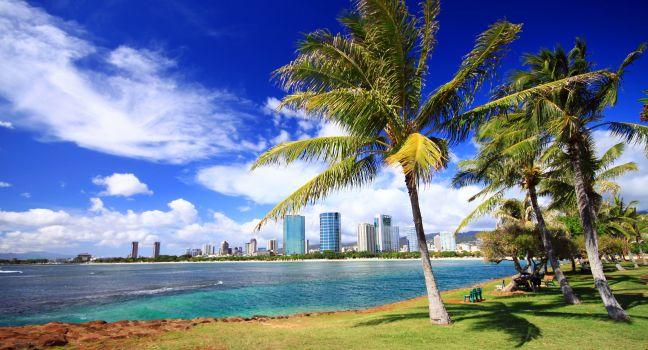
Ala Moana Regional Park
Ala Moana
Fodor's Choice
Share This
(c) Dubphoto | Dreamstime.com
A protective reef makes Ala Moana essentially a ½-mile-wide saltwater swimming pool. Very smooth sand and no waves create a haven for families and stand-up paddleboarders. After Waikiki, this is the most popular beach among visitors, and the free parking area can fill up quickly on sunny weekends. On the Waikiki side is a peninsula called Magic Island, with shady trees and paved sidewalks ideal for jogging. Ala Moana Regional Park also has playing fields, tennis courts, and a couple of small ponds for sailing toy boats. The beach is for everyone, but only in the daytime; after dark, it's a high-crime area, with many unhoused people. Amenities: food and drink; lifeguards; parking (free); showers; toilets. Best for: swimming; walking.
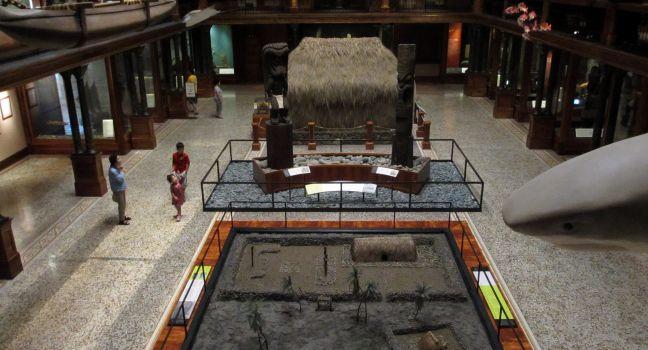
Bishop Museum
Kapalama
Fodor's Choice
Share This
(c) Brodogg1313 | Dreamstime.com
The state's designated history and culture museum, founded in 1889 by Charles R. Bishop as a memorial to his wife, Princess Bernice Pauahi Bishop, began as a repository for the royal possessions of this last direct descendant of King Kamehameha the Great. Today, its five excellent exhibit halls contain almost 25 million items that tell the history of the Hawaiian Islands and their Pacific neighbors.
Gain understanding of the entire region in the Pacific Hall, and learn about the culture of the Islands through state-of-the-art and often-interactive displays in the Hawaiian Hall. Spectacular artifacts—lustrous feather capes, bone fishhooks, the skeleton of a giant sperm whale, photography and crafts displays, and a well-preserved grass house—are displayed inside a three-story, 19th-century, Victorian-style gallery. The building alone, with its huge turrets and immense stone walls, is worth seeing.
In the 16,500-square-foot science adventure wing, it's hard to miss the three-story simulated volcano where kids (young and young at heart) can make lava burble. A walk through the glowing black light tunnel is another fun feature. Also check out the planetarium, Hawaiian cultural and science demonstrations, special exhibits, and the Shop Pacifica.
Diamond Head State Monument
Waikiki
Fodor's Choice
Share This
(c) Sgoodwin4813 | Dreamstime.com
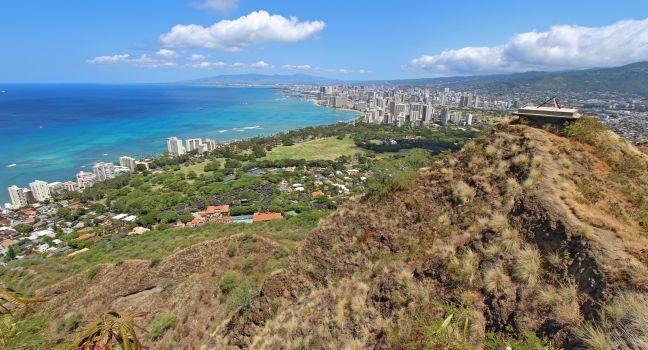
Panoramas from this 760-foot extinct volcanic peak, which was once used as a military fortification, extend from Waikiki and Honolulu in one direction and out to Koko Head in the other, with surfers and windsurfers scattered like confetti on the cresting waves below. The 360-degree perspective is a great orientation for first-time visitors. On a clear day, look east past Koko Head to glimpse the outlines of the islands of Maui and Molokai.
Reservations to enter this popular park are required in advance for those who are not Hawaii residents, and an entrance and parking fee must be paid via credit card. You can reserve up to 30 days in advance; the last reservation is 4 pm. From Waikiki, take Kalakaua Avenue east, turn left at Monsarrat Avenue, head a mile up the hill, and look for a sign on the right. Drive through the tunnel to the inside of the crater. The ¾-mile trail to the top begins at the parking lot, and the hike up to the crater is steep, with numerous stairs to climb. So if you aren't in the habit of getting occasional exercise, this might not be for you. At the top, you have a somewhat awkward scramble through a dark tunnel and bunker out into the open air, but the view is worth it.
As you walk, note the color of the vegetation: if the mountain is brown, Honolulu has been without significant rain for a while, but if the trees and undergrowth glow green, you'll know it's the wet season (winter) without looking at a calendar. Winter is when rare Hawaiian marsh plants revive on the floor of the crater. Wear closed-toe shoes or sneakers, a hat, and take bottled water with you to stay hydrated under the tropical sun. There are no water stations (or any shade) along the hike. Keep an eye on your watch if you're here at day's end: the gates close promptly at 6 pm. To beat the heat and the crowds, rise early and make the hike before 8 am.
Recommended Fodor's Video
Iolani Palace
Downtown
Fodor's Choice
Share This
Bryan Busovicki / Shutterstock
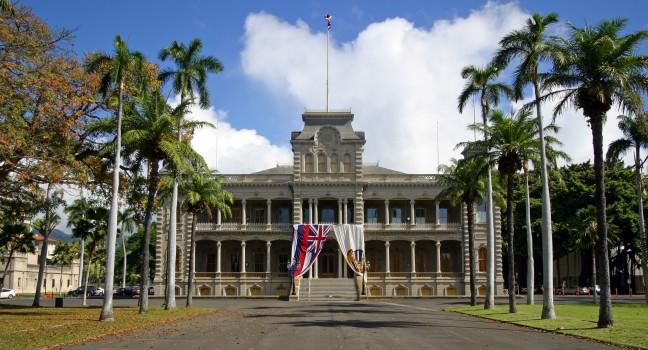
America's only official royal residence, on the site of an earlier palace, was completed in 1882 and contains the thrones of King Kalakaua and his successor (and sister) Queen Liliuokalani. Bucking the stereotype of simple island life, the palace had electric lights even before the White House. Downstairs galleries showcase the royal jewelry, as well as a kitchen and offices that have been restored to the glory of the monarchy era. The palace gift shop and ticket office are in what was formerly the Iolani Barracks, built to house the Royal Guard. The palace has self-guided audio tours, docent-led tours, and specialty tours.It's best to make reservations for guided tours a few days in advance.
A wide, soft, ultra-white shore with gently lapping waves makes this fine beach a family favorite for running-jumping-frolicking fun. Other bonuses include the shaded, grassy grilling area, pickleball courts, and many aquatic rental options. The beach fronts the Hale Koa Hotel as well as Fort DeRussy. Amenities: food and drink; lifeguards; showers; toilets; water sports. Best for: swimming; walking.
Honolulu Museum of Art
Downtown
Fodor's Choice
Share This
The museum holds an impressive permanent collection that includes the third-largest assembly of Hiroshige's ukiyo-e Japanese prints in the country (donated by author James Michener); Italian Renaissance paintings; American and European art by Monet, Van Gogh, and Whistler, among many others; and a newer gallery of Hawaiian art. Originally built around the collection of a Honolulu matron who donated much of her estate to the museum, it is housed in a maze of courtyards, cloistered walkways, and quiet, low-ceiling spaces. The newer Luce Pavilion complex, nicely incorporated into the more traditional architecture of the museum, has a traveling-exhibit gallery, an excellent café, and a gift shop. The Doris Duke Theatre screens art films. This is also the jumping-off point for tours of Doris Duke's striking estate, which is now the Shangri La Museum of Islamic Art, Culture, and Design. If you wish to visit Shangri La, you should reserve tickets well in advance.
Pearl Harbor National Memorial
Fodor's Choice
Share This
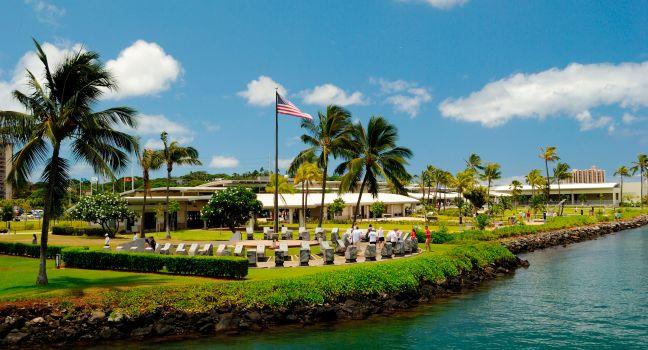
Pearl Harbor is still a working military base as well as Oahu’s most visited attraction, consisting of five distinct destinations. Managed by the National Park Service, the Pearl Harbor Visitor Center and USS Arizona Memorial make up the national memorial, where exhibits tell the story not only of the devastating Japanese attack on Pearl Harbor on December 7, 1941, but also of the wartime internment of Japanese Americans, World War II battles in the Aleutian Islands, and the occupation of Japan after the war. The history continues at three privately operated sights: the Pacific Fleet Submarine Museum (whose centerpiece is the USS Bowfin), the Battleship Missouri Memorial, and the Pearl Harbor Aviation Museum.
A valid government-issued photo ID is required to enter the base. You can walk to the visitor center or the submarine museum from the parking lot, but access to the USS Arizona requires a ferry ride (and ticket reservations via www.recreation.gov), and access to other sites, including the USS Missouri and the aviation museum, requires a shuttle bus trip. Advance reservations are required to access USS Arizona Memorial. There are no same-day tickets except rare standby spots.
No bags of any kind except clear stadium ones—not even small purses—are allowed at any of the sights, though cameras, cell phones, and wallets can be hand-carried. A bag check is available. Children under four can visit the submarine museum, but for safety reasons, they are not allowed on the USS Bowfin itself.
USS Arizona Memorial
Fodor's Choice
Share This
Lined up tight in a row of seven battleships off Ford Island, the USS Arizona took a direct hit on December 7, 1941, exploded, and rests still on the shallow bottom where she settled. You must reserve tickets (www.recreation.gov) ahead of time to ensure access to the memorial; same-day tickets are no longer offered. As spaces are limited and tend to fill up, reserve as far ahead as possible; you can do so up to two months in advance. When your tour starts, you watch a short documentary film, then board the ferry to the memorial.
The swooping, stark-white structure, which straddles the wreck of the USS Arizona, was designed by Honolulu architect Alfred Preis to represent both the depths of the low-spirited, early days of the war and the uplift of victory. A somber, contemplative mood descends upon visitors during the ferry ride; this is a place where 1,177 people died. Gaze at the names of the dead carved into the wall of white marble. Look at oil on the water's surface, still slowly escaping from the sunken ship. Scatter flowers (but no lei—the string is bad for the fish). Salute the flag. Remember Pearl Harbor.
Battleship Missouri Memorial
Share This
Lindasj22 / Shutterstock
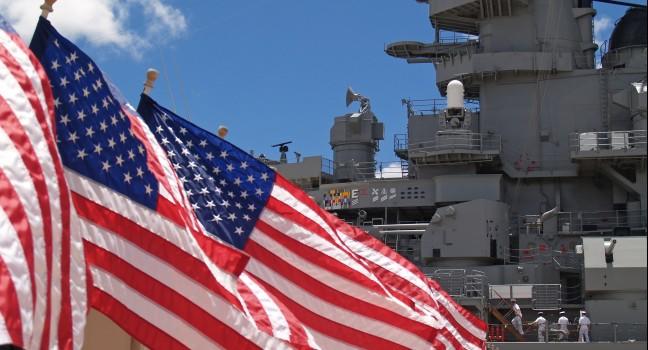
Together with the Arizona Memorial, the USS Missouri's presence in Pearl Harbor perfectly frames America's World War II experience, which began December 7, 1941, and ended on the "Mighty Mo's" starboard deck with the signing of the Terms of Surrender on September 2, 1945. To begin your visit on the fully restored vessel, pick up tickets online or at the Pearl Harbor Visitor Center. Then board a shuttle bus for the eight-minute ride to Ford Island and the teak decks and towering superstructure of the last American battleship ever built. Join a guided tour to learn more about the Missouri's long and dramatic history. Two options for upgraded tours (an additional $30) provide an up-close look at areas not on the main tour, including the captain's cabin, the bridge, and engine and fire rooms.
The Missouri is 887 feet long and 209 feet tall, with nine 116-ton guns capable of firing up to 23 miles. Absorb these numbers during the tour, then stop to take advantage of the view from the decks. Near the entrance is a gift shop, as well as a lunch wagon and shave ice stand that serve casual fare.
Capitol Modern
Downtown
Share This
Originally named the Hawaii State Art Museum, this fairly compact museum reopened after a renovation in late 2023 as Capitol Modern, a somewhat opaque name chosen to distinguish it as a contemporary art venue. The museum has four galleries that display art from the Hawaii-focused state art collection and the Hawaii State Foundation on Culture and the Arts. There's an outdoor sculpture garden and courtyard where events occur frequently, as well as The POD (Passion on Display), which presents artist-in-residence and temporary exhibitions. All galleries and programs at the museum are free; also check for free monthly events such as live entertainment.
Hawaii was the first state to legislate that a portion of the taxes paid on commercial building projects be set aside for the purchase of artwork. The state bought an ornate period-style building (at one time the Armed Services YMCA Building), and, in 2002, opened a 12,000-square-foot museum on the second floor dedicated to the art of Hawaii in all its ethnic diversity.
Diamond Head Beach Park
Diamond Head
Share This
You have to do a little hiking to reach this beautiful, remote spot at the base of Diamond Head Crater. Although the beach is just a small, narrow strip of sand with lots of coral in the water, the views from the point are breathtaking, and it's fun to watch the windsurfers skimming along. From the parking area, look for an opening in the wall where an unpaved trail leads down to the beach. Even for the unadventurous, a stop at the lookout point is well worth the time. Amenities: parking (no fee); showers. Best for: solitude; sunset; surfing; windsurfing.
Duke's Beach
Waikiki
Share This
Named for Duke Kahanamoku, Hawaii's famous Olympic swimming champion and waterman, this hard-packed beach fronting the Hilton Hawaiian Village Waikiki Beach Resort is great for families. It's the only stretch of Waikiki with shade trees on the sand, and its waters are very calm thanks to a rock wall that creates a semiprotected cove. The ocean clarity here is not as good as elsewhere, but this is a small price to pay for peace of mind about youngsters. Amenities: food and drink; parking (fee); showers; toilets. Best for: sunset; swimming; walking.
Foster Botanical Garden
Chinatown
Share This
Some of the trees in this 14-acre botanical garden, which opened in 1931, date from 1853, when Queen Kalama allowed a young German doctor to lease a portion of her land. More than 170 years later, you can see these trees and many others along with bromeliads, orchids, and other tropical plants, some of which are rare or endangered. Look out in particular for the cannonball tree and the redwood-size quipo tree.
Gray's Beach
Waikiki
Share This
In the 1920s, a little guesthouse called Gray's-by-the-Sea stood on what is now a very narrow strip of sand that's best for walking, admiring the ocean, and imagining a Waikiki of yesteryear. (Note that the tides often put sand space at a premium, so you have to use the elevated concrete walkway most of the time.) Catamaran charters launch from this beach throughout the day, sailing out for views of Diamond Head and Waikiki Beach. You can get a great view of Diamond Head here, and you can also sip a mai tai at House Without a Key, a legendary beach restaurant at the Halekulani hotel a few steps away. Amenities: food and drink; lifeguards; parking (fee); showers; toilets. Best for: walking.
Hawaii State Capitol
Downtown
Share This
The capitol's architecture is richly symbolic: the columns resemble palm trees, the legislative chambers are shaped like volcanic cinder cones, and the central court is open to the sky, representing Hawaii's open society. Replicas of the Hawaii state seal, each weighing 7,500 pounds, hang above both its entrances. The building, which in 1969 replaced Iolani Palace as the seat of government, is surrounded by reflecting pools, just as the Islands are embraced by water. A pair of statues, often draped in lei, flank the building: one of the beloved Queen Liliuokalani and the other of the sainted Father Damien de Veuster, famous for helping Molokai's Hansen's disease (leprosy) patients. You can take a self-guided tour of the capitol using a brochure provided online or in person (Room 415 at the capitol) by the governor's office.
Hawaii State Library
Downtown
Share This
The Samuel Manaiakalani Kamakau Room, on the first floor in the library's mauka (Hawaiian for "mountain") courtyard, houses an extensive Hawaii and Pacific book collection and pays tribute to Kamakau, a missionary student whose 19th-century writings in English offer rare and vital insight into traditional Hawaiian culture.This beautifully renovated main library was built in 1913.
Hawaii Theatre
Chinatown
Share This
Opened in 1922, this theater earned rave reviews for its neoclassical design, with Corinthian columns, marble statues, and plush carpeting and drapery. The so-called Pride of the Pacific was rescued from demolition in the early 1980s, underwent a massive renovation, and is now listed on both the State and National Registers of Historic Places. The 1,400-seat venue hosts concerts, theatrical productions, dance performances, and film screenings. Guided tours of the theater end with a miniconcert on the historical orchestral pipe organ and can be booked through the box office. If you're interested in the guided tours on Thursdays at 11 am, call a few days ahead to reserve.
Hawaii Walls – World Wide Walls
Kakaako
Share This
You can grab a bite and take in the unique street art here at any time of the year. Formerly known as the POW! WOW! Worldwide art collective, this project was founded in Hawaii in 2010 and has spread to cities globally. Its most visible Oahu endeavor is a multiblock area where colorful, eclectic, and innovative murals are painted on once-derelict-looking warehouses and other buildings. Every year, artists from all over come to refresh existing murals and add new ones. In 2023, the projects moved out of Kakaako for the first time (to Kalihi-Palama in the first year).
Hawaiian Mission Houses Historic Site and Archives
Downtown
Share This
Determined missionaries arrived in Hawaii in 1820, gaining royal favor and influencing much of Island life, and their descendants became leaders in government, business, and education. Here you can learn about their influence and walk through their original dwellings, including Hawaii's oldest Western-style wooden structure, a white-frame house that was prefabricated in New England and shipped around the Horn. A hale pili (traditional Hawaiian dwelling) sits nearby. Be sure to sign up in advance for one of the hourly guided tours: docents not only paint an excellent picture of what mission life was like, but they also take you to areas of the museum you wouldn't otherwise be able to see. Special Hawaiian, architectural, and history tours are also offered on certain days, and you can take a self-guided tour of the cemetery across the street. Rotating displays showcase such arts as Hawaiian quilting, portraits, and even toys, and a rich archival library is also open to the public.
Honolulu Hale
Downtown
Share This
This Mediterranean Renaissance–style building was constructed in 1929 and serves as the center of government for the City and County of Honolulu. Stroll through the shady, open-ceiling lobby with exhibits of works by local artists. During the winter holiday season, the Hale (Hawaiian for "house") becomes the focal point for the annual Honolulu City Lights, a display of lighting and playful holiday scenes spread around the campus, including the famous, gigantic Shaka Santa and Tute Mele. The mayor's office keeps a calendar of upcoming events.
Honolulu Zoo
Waikiki
Share This
The world definitely has bigger and newer zoos, but this 42-acre facility features well-paved, walkable trails amid a lush garden with tropical flowers. To get a glimpse of the endangered nene, the Hawaii state bird, check out the zoo's Kipuka Nene Sanctuary. Other highlights include a Japanese Giant Salamander habitat and an ectotherm complex, which houses a Burmese python, elongated tortoises, and a giant African snail. Though many animals prefer to remain invisible—particularly the big cats—the monkeys and elephants appear to enjoy being seen and are a hoot to watch. It's best to get to the zoo when it opens because the animals are livelier in the cool of the morning. Children adore the petting zoo, where they can make friends with a llama or stand in the middle of a koi pond.
There's an exceptionally good gift shop. On weekends, the Art on the Zoo Fence, on Monsarrat Avenue on the Diamond Head side outside the zoo, has affordable artwork by local contemporary artists. Metered parking is available along the makai (ocean) side of the park and in the lot next to the zoo. Parking is free at the lot across the street (at the Waikiki Shell), but it can fill up early. TheBus makes stops here along the way to and from Ala Moana Center and Sea Life Park (Routes 8 and 22).
Izumo Taishakyo Mission of Hawaii
Chinatown
Share This
From Chinatown Cultural Plaza, cross a stone bridge to the Izumo Taishakyo Mission of Hawaii to visit the shrine established in 1906. It honors Okuninushi-no-Mikoto, a kami (god) who is believed in Shinto tradition to bring good fortune if properly courted (and thanked afterward).
Kahaloa and Ulukou Beaches
Waikiki
Share This
This busy beach has everything: famous for the Canoes surf break, it's the launching spot for most of the catamaran charters that sail out to Diamond Head several times a day, as well as the place for surfing lessons and outrigger canoe rentals. Chair and umbrella rentals are available, and great music and outdoor dancing beckon at the lively Duke's restaurant, where shirt and shoes not only aren't required, they're discouraged. The Royal Hawaiian Hotel and Moana Surfrider are here. Amenities: food and drink; lifeguards; parking (fee); showers; toilets; water sports. Best for: partiers; surfing.
Kaimana (Sans Souci) Beach
Waikiki
Share This
Across from the zoo, at the eastern end of Waikiki along what is known as the Gold Coast, this small rectangle of sand is a local-favorite sunning spot for beach lovers of all ages. Although it's usually quieter than the stretches of beach in the heart of town, it's also close to the conveniences of Waikiki. Children can splash safely in its shallow waters, which are protected (for now) by the walls of the historic natatorium, a long-closed, Olympic-size, saltwater swimming arena. Serious swimmers and triathletes also train in the channel beyond the reef here. The Kaimana Beach Hotel and popular Hau Tree lanai restaurant are next door. Amenities: lifeguards; parking (fee); showers; toilets. Best for: swimming; walking.
Kamehameha I Statue
Downtown
Share This
Honoring the Big Island chieftain who united all the warring Hawaiian Islands into one kingdom in the early 19th century, this statue, which stands with one arm outstretched in welcome, is one of two cast in Paris by American sculptor T. R. Gould. The original statue, lost at sea and replaced by this one, was eventually salvaged and is now in Kapaau, on the Big Island, near the king's birthplace. Each year on the king's birthday (June 11), the more famous copy is draped in fresh lei that reach lengths of 18 feet and longer. A parade proceeds past the statue, and Hawaiian civic clubs, women in hats and impressive long holoku dresses, and men in sashes and cummerbunds honor the leader, whose name means "The One Set Apart."
Kapiolani Park Bandstand
Waikiki
Share This
The Victorian-style bandstand, built in the late 1890s, is Kapiolani Park's stage for community entertainment and concerts. Founded by King Kamehameha III in 1836, the Royal Hawaiian Band is the nation's only city-sponsored band and performs free concerts at the bandstand as well as at Iolani Palace and the center stage at Ala Moana Center. Visit the band's website for concert dates (www.rhb-music.com), and check event-listing websites and the Honolulu Star-Advertiser—Oahu's local newspaper—for information on other coming bandstand attractions.
Kawaiahao Church
Downtown
Share This
Called Hawaii's Westminster Abbey, this historic house of worship was completed in 1842 and witnessed the coronations, weddings, and funerals of generations of Hawaiian royalty. Each of the building's 14,000 coral blocks was quarried from reefs offshore at depths of more than 20 feet and transported to this site. Interior woodwork was created from the forests of the Koolau Mountains, and the upper gallery displays paintings of the royal families. The graves of missionaries and of King Lunalilo are adjacent. Services in English, with songs and prayers in Hawaiian, are held each Sunday (Kawaiahao's affiliation is United Church of Christ). You can follow a free audio tour of the church and grounds or just look around by yourself.
Kuan Yin Temple
Chinatown
Share This
A couple of blocks mauka (toward the mountains) from Chinatown is the oldest Buddhist temple in the Islands. Mistakenly called a goddess by some, Kuan Yin, also known as Kannon, is a bodhisattva—one who chose to remain on Earth doing good even after achieving enlightenment. Transformed from a male into a female figure centuries ago, she is credited with being particularly sympathetic to women. You will see representations of her all over the Islands: holding a lotus flower (beauty from the mud of human frailty), as at the temple; pouring out a pitcher of oil (like mercy flowing); or as a sort of Madonna with a child. Visitors are permitted but should be mindful that this is a practicing place of worship.
Kuhio Beach Park
Waikiki
Share This
Featuring a bronze statue of Duke Kahanamoku, the father of modern-day surfing, this lively beach is bordered by a landscaped walkway with a few benches and some shade. It's great for strolls and people-watching any time of day. Check out the Kuhio Beach hula mound Tuesday, Thursday, and Saturday at 6:30 (at 6, November–January) for free hula and Hawaiian-music performances and a sunset torch-lighting ceremony. Surf lessons for beginners are available from the beach center every half hour. Amenities: food and drink; lifeguards; showers; toilets; water sports. Best for: surfing; walking.
Subscribe to Newsletter
Sign up for Travel Tips & News
I want emails from Fodor's Travel with travel information and promotions. I can unsubscribe
any time using the unsubscribe link at the end of all emails.
Thank you for your interest!
Look out for our newsletters with travel tips and special offers.
Sign up for Travel Tips & News
By signing up for the
newsletter, I agree to the Privacy Policy. You must check the box to subscribe
Thank you for your interest!
Look out for our newsletters with travel tips and special offers.