Get FREE email communications from Fodor's Travel, covering must-see travel destinations, expert
trip planning advice, and travel inspiration to fuel your passion.
We've compiled the best of the best in Honolulu and Pearl Harbor - browse our top choices for the top
things to see or do during your stay.
Sorry! We don't have any recommendations for Honolulu and Pearl Harbor right now.
Sights Filter
Ala Moana Regional Park
Ala Moana
Fodor's Choice
Share This
(c) Dubphoto | Dreamstime.com
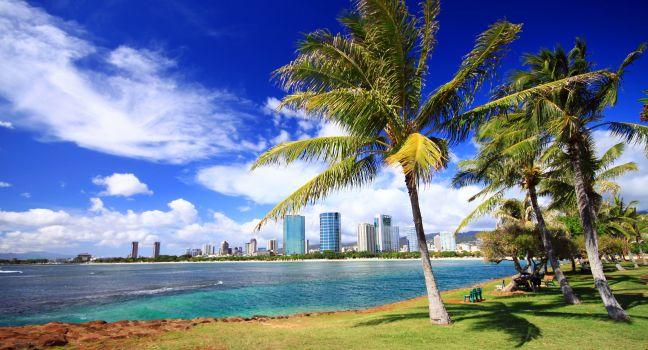
A protective reef makes Ala Moana essentially a ½-mile-wide saltwater swimming pool. Very smooth sand and no waves create a haven for families and stand-up paddleboarders. After Waikiki, this is the most popular beach among visitors, and the free parking area can fill up quickly on sunny weekends. On the Waikiki side is a peninsula called Magic Island, with shady trees and paved sidewalks ideal for jogging. Ala Moana Regional Park also has playing fields, tennis courts, and a couple of small ponds for sailing toy boats. The beach is for everyone, but only in the daytime; after dark, it's a high-crime area, with many unhoused people. Amenities: food and drink; lifeguards; parking (free); showers; toilets. Best for: swimming; walking.
Bishop Museum
Kapalama
Fodor's Choice
Share This
(c) Brodogg1313 | Dreamstime.com
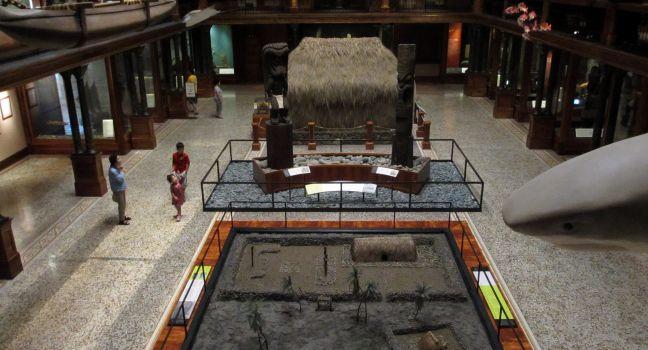
The state's designated history and culture museum, founded in 1889 by Charles R. Bishop as a memorial to his wife, Princess Bernice Pauahi Bishop, began as a repository for the royal possessions of this last direct descendant of King Kamehameha the Great. Today, its five excellent exhibit halls contain almost 25 million items that tell the history of the Hawaiian Islands and their Pacific neighbors.
Gain understanding of the entire region in the Pacific Hall, and learn about the culture of the Islands through state-of-the-art and often-interactive displays in the Hawaiian Hall. Spectacular artifacts—lustrous feather capes, bone fishhooks, the skeleton of a giant sperm whale, photography and crafts displays, and a well-preserved grass house—are displayed inside a three-story, 19th-century, Victorian-style gallery. The building alone, with its huge turrets and immense stone walls, is worth seeing.
In the 16,500-square-foot science adventure wing, it's hard to miss the three-story simulated volcano where kids (young and young at heart) can make lava burble. A walk through the glowing black light tunnel is another fun feature. Also check out the planetarium, Hawaiian cultural and science demonstrations, special exhibits, and the Shop Pacifica.
Diamond Head State Monument
Waikiki
Fodor's Choice
Share This
(c) Sgoodwin4813 | Dreamstime.com
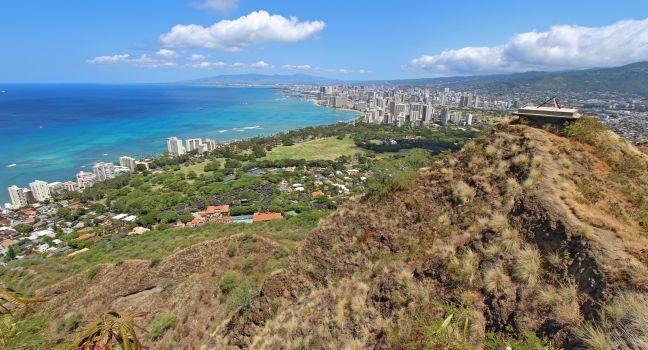
Panoramas from this 760-foot extinct volcanic peak, which was once used as a military fortification, extend from Waikiki and Honolulu in one direction and out to Koko Head in the other, with surfers and windsurfers scattered like confetti on the cresting waves below. The 360-degree perspective is a great orientation for first-time visitors. On a clear day, look east past Koko Head to glimpse the outlines of the islands of Maui and Molokai.
Reservations to enter this popular park are required in advance for those who are not Hawaii residents, and an entrance and parking fee must be paid via credit card. You can reserve up to 30 days in advance; the last reservation is 4 pm. From Waikiki, take Kalakaua Avenue east, turn left at Monsarrat Avenue, head a mile up the hill, and look for a sign on the right. Drive through the tunnel to the inside of the crater. The ¾-mile trail to the top begins at the parking lot, and the hike up to the crater is steep, with numerous stairs to climb. So if you aren't in the habit of getting occasional exercise, this might not be for you. At the top, you have a somewhat awkward scramble through a dark tunnel and bunker out into the open air, but the view is worth it.
As you walk, note the color of the vegetation: if the mountain is brown, Honolulu has been without significant rain for a while, but if the trees and undergrowth glow green, you'll know it's the wet season (winter) without looking at a calendar. Winter is when rare Hawaiian marsh plants revive on the floor of the crater. Wear closed-toe shoes or sneakers, a hat, and take bottled water with you to stay hydrated under the tropical sun. There are no water stations (or any shade) along the hike. Keep an eye on your watch if you're here at day's end: the gates close promptly at 6 pm. To beat the heat and the crowds, rise early and make the hike before 8 am.
Recommended Fodor's Video
Iolani Palace
Downtown
Fodor's Choice
Share This
Bryan Busovicki / Shutterstock
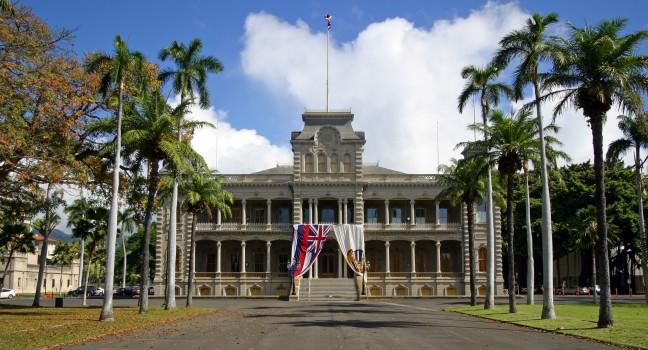
America's only official royal residence, on the site of an earlier palace, was completed in 1882 and contains the thrones of King Kalakaua and his successor (and sister) Queen Liliuokalani. Bucking the stereotype of simple island life, the palace had electric lights even before the White House. Downstairs galleries showcase the royal jewelry, as well as a kitchen and offices that have been restored to the glory of the monarchy era. The palace gift shop and ticket office are in what was formerly the Iolani Barracks, built to house the Royal Guard. The palace has self-guided audio tours, docent-led tours, and specialty tours.It's best to make reservations for guided tours a few days in advance.
A wide, soft, ultra-white shore with gently lapping waves makes this fine beach a family favorite for running-jumping-frolicking fun. Other bonuses include the shaded, grassy grilling area, pickleball courts, and many aquatic rental options. The beach fronts the Hale Koa Hotel as well as Fort DeRussy. Amenities: food and drink; lifeguards; showers; toilets; water sports. Best for: swimming; walking.
Honolulu Museum of Art
Downtown
Fodor's Choice
Share This
The museum holds an impressive permanent collection that includes the third-largest assembly of Hiroshige's ukiyo-e Japanese prints in the country (donated by author James Michener); Italian Renaissance paintings; American and European art by Monet, Van Gogh, and Whistler, among many others; and a newer gallery of Hawaiian art. Originally built around the collection of a Honolulu matron who donated much of her estate to the museum, it is housed in a maze of courtyards, cloistered walkways, and quiet, low-ceiling spaces. The newer Luce Pavilion complex, nicely incorporated into the more traditional architecture of the museum, has a traveling-exhibit gallery, an excellent café, and a gift shop. The Doris Duke Theatre screens art films. This is also the jumping-off point for tours of Doris Duke's striking estate, which is now the Shangri La Museum of Islamic Art, Culture, and Design. If you wish to visit Shangri La, you should reserve tickets well in advance.
Pearl Harbor National Memorial
Fodor's Choice
Share This
Pearl Harbor is still a working military base as well as Oahu’s most visited attraction, consisting of five distinct destinations. Managed by the National Park Service, the Pearl Harbor Visitor Center and USS Arizona Memorial make up the national memorial, where exhibits tell the story not only of the devastating Japanese attack on Pearl Harbor on December 7, 1941, but also of the wartime internment of Japanese Americans, World War II battles in the Aleutian Islands, and the occupation of Japan after the war. The history continues at three privately operated sights: the Pacific Fleet Submarine Museum (whose centerpiece is the USS Bowfin), the Battleship Missouri Memorial, and the Pearl Harbor Aviation Museum.
A valid government-issued photo ID is required to enter the base. You can walk to the visitor center or the submarine museum from the parking lot, but access to the USS Arizona requires a ferry ride (and ticket reservations via www.recreation.gov), and access to other sites, including the USS Missouri and the aviation museum, requires a shuttle bus trip. Advance reservations are required to access USS Arizona Memorial. There are no same-day tickets except rare standby spots.
No bags of any kind except clear stadium ones—not even small purses—are allowed at any of the sights, though cameras, cell phones, and wallets can be hand-carried. A bag check is available. Children under four can visit the submarine museum, but for safety reasons, they are not allowed on the USS Bowfin itself.
USS Arizona Memorial
Fodor's Choice
Share This
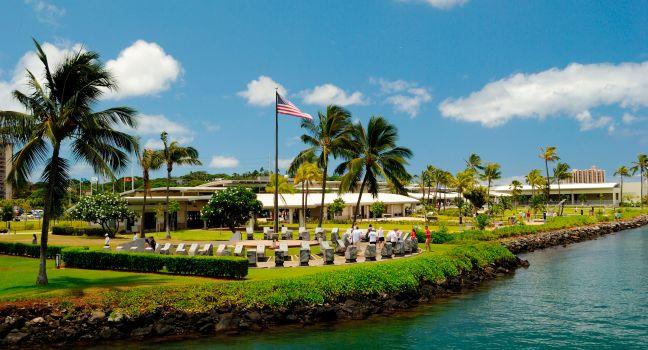
Lined up tight in a row of seven battleships off Ford Island, the USS Arizona took a direct hit on December 7, 1941, exploded, and rests still on the shallow bottom where she settled. You must reserve tickets (www.recreation.gov) ahead of time to ensure access to the memorial; same-day tickets are no longer offered. As spaces are limited and tend to fill up, reserve as far ahead as possible; you can do so up to two months in advance. When your tour starts, you watch a short documentary film, then board the ferry to the memorial.
The swooping, stark-white structure, which straddles the wreck of the USS Arizona, was designed by Honolulu architect Alfred Preis to represent both the depths of the low-spirited, early days of the war and the uplift of victory. A somber, contemplative mood descends upon visitors during the ferry ride; this is a place where 1,177 people died. Gaze at the names of the dead carved into the wall of white marble. Look at oil on the water's surface, still slowly escaping from the sunken ship. Scatter flowers (but no lei—the string is bad for the fish). Salute the flag. Remember Pearl Harbor.
Subscribe to Newsletter
Sign up for Travel Tips & News
I want emails from Fodor's Travel with travel information and promotions. I can unsubscribe
any time using the unsubscribe link at the end of all emails.
Thank you for your interest!
Look out for our newsletters with travel tips and special offers.
Sign up for Travel Tips & News
By signing up for the
newsletter, I agree to the Privacy Policy. You must check the box to subscribe
Thank you for your interest!
Look out for our newsletters with travel tips and special offers.